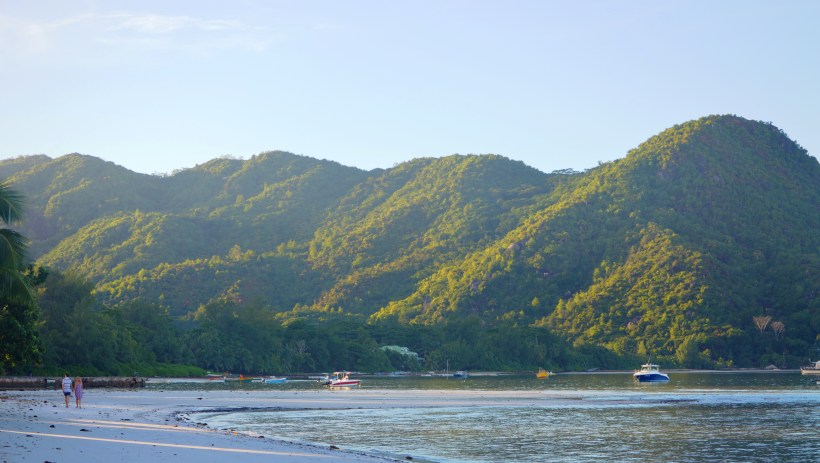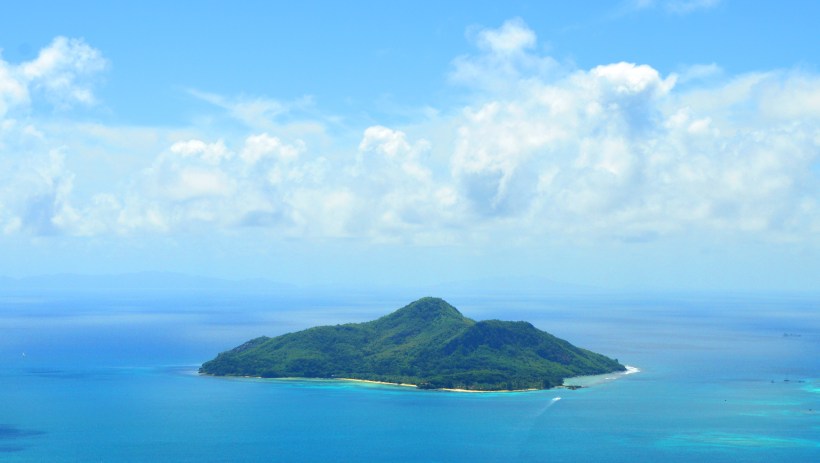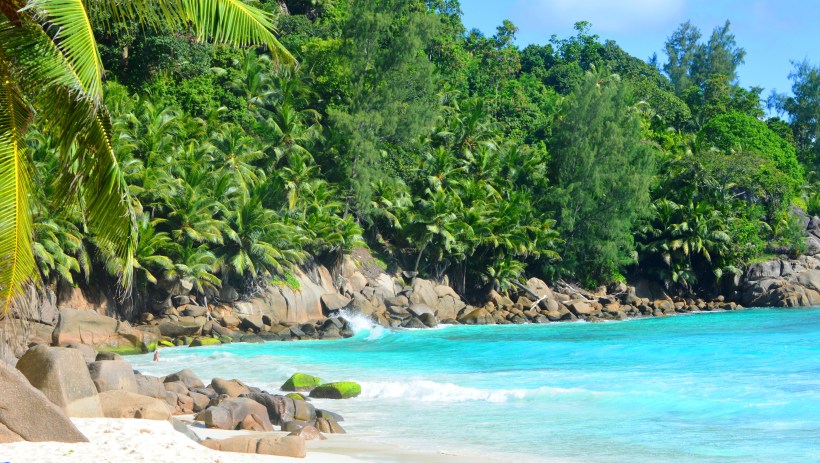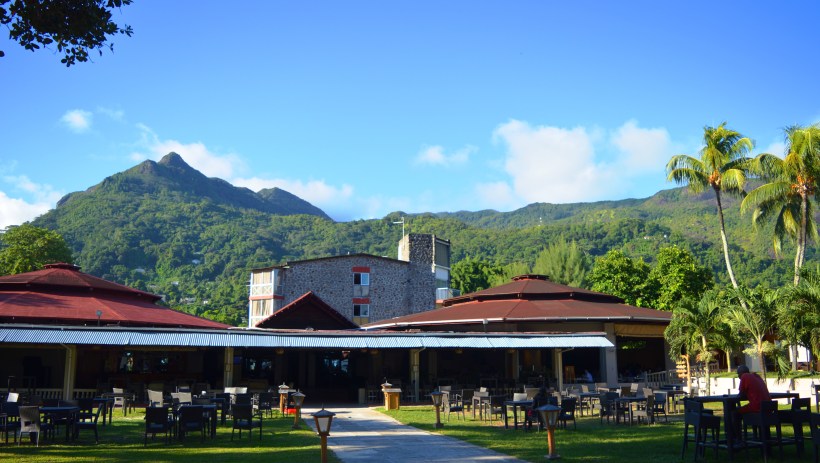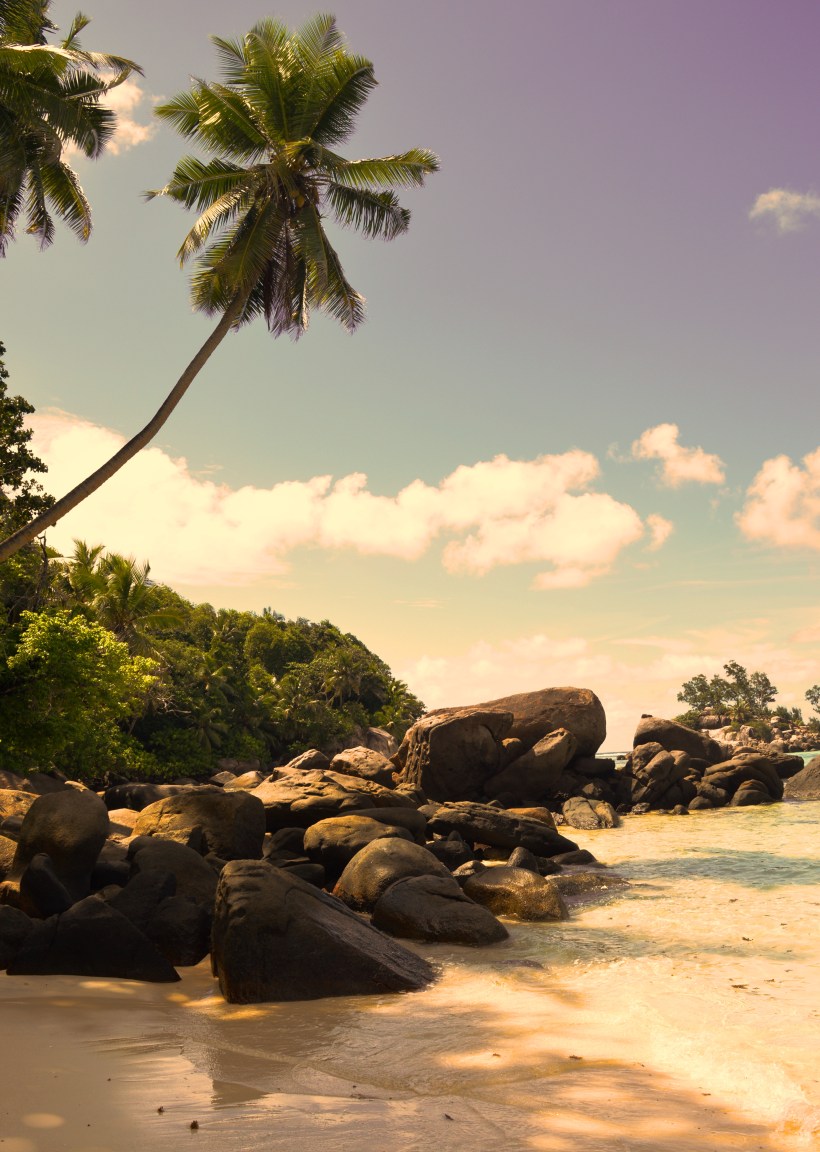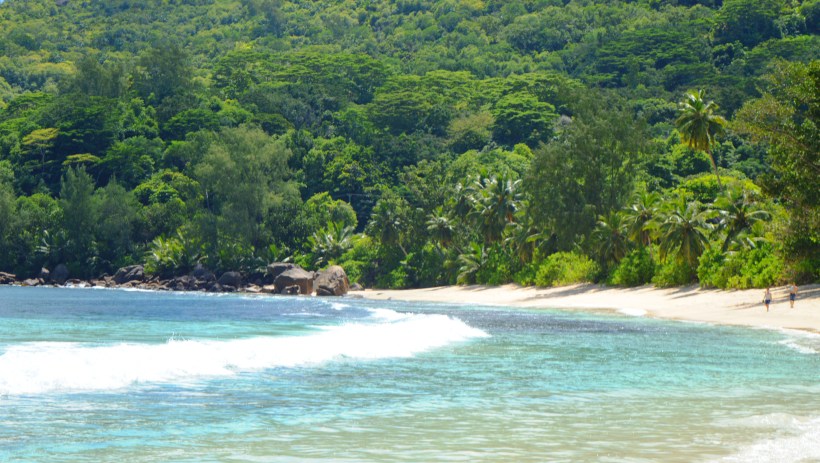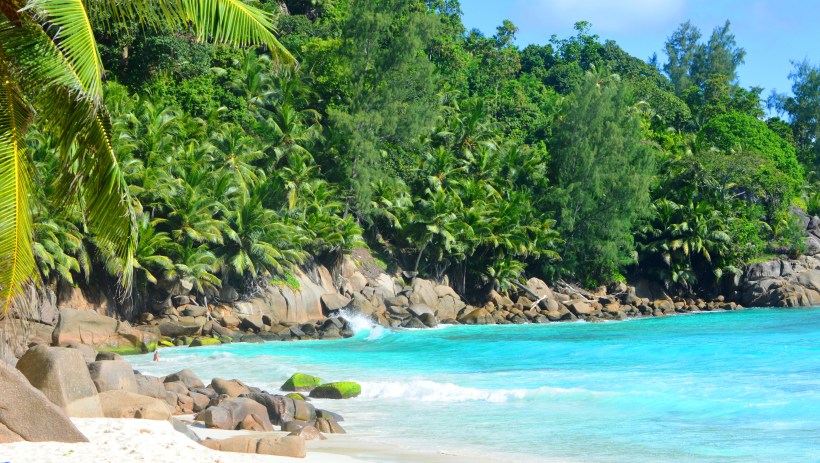
The Creole Tales – V

Subhayan Bhattacharyya

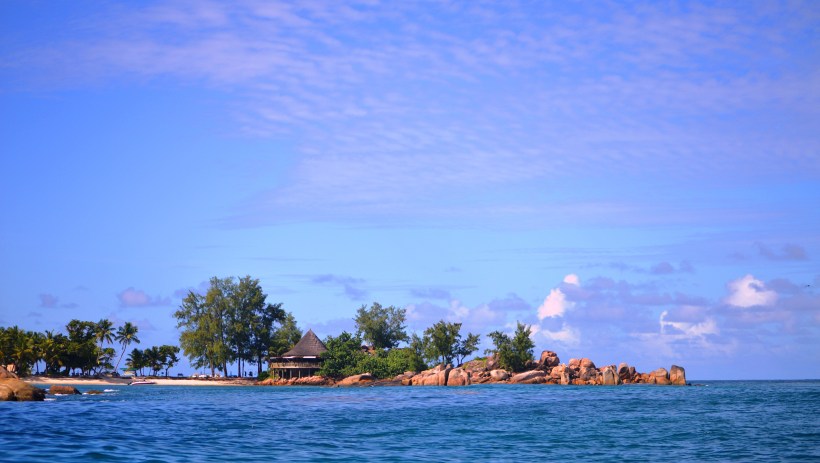
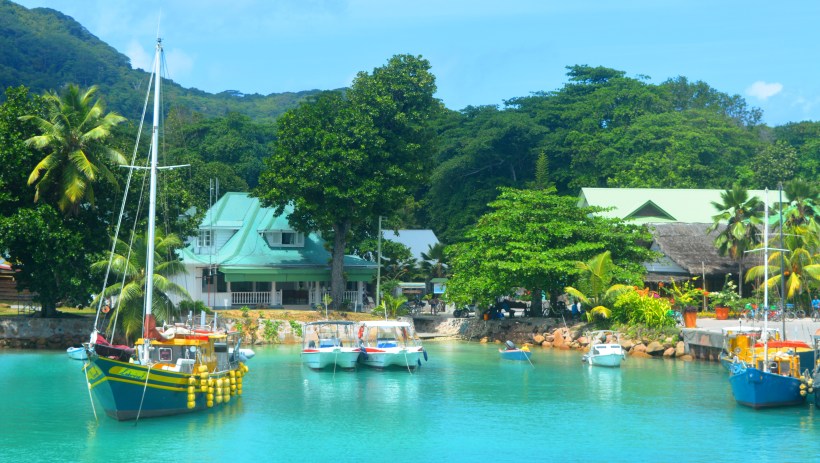
The trip from Praslin to La Digue is only possible by ferry or a catamaran. The fast catamarans travel the distance between Praslin and La Digue in a scenic 15 minutes trip. La Digue is the third most populated island of the Seychelles, and lies to the east of Praslin. It has an area of 10.08 sq. km, which makes it relatively easy to travel around by bike or on foot. La Digue was named after a ship in the fleet of French explorer Marc-Joseph Marion du Fresne, who visited the Seychelles in 1768.
DSC_0474.JPG
Pier at La Digue Island

As our ferry approached the pier, we were amazed by the sight present in front of us. It was like a picture postcard painted in heaven.  Our hostess was waiting for us at the end of the pier. She was an aged lady running a guest house in La Passé along with her husband. The village of La Passé is the only inhabited area in the whole island. Upon reaching the guest house we were welcomed with a stomach soothing fruit juice. After freshening up we took a tandem bicycle on rent. Bicycles are available with all the guest houses can be rented out for a very nominal charge. It is the best way to explore this secluded Island.

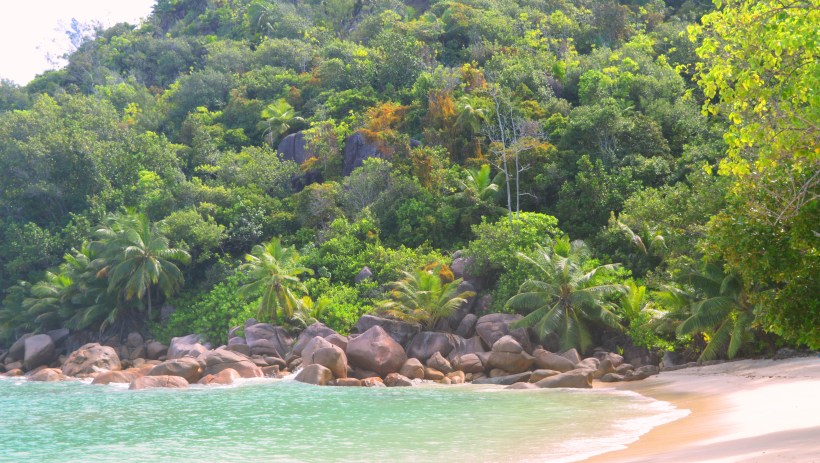
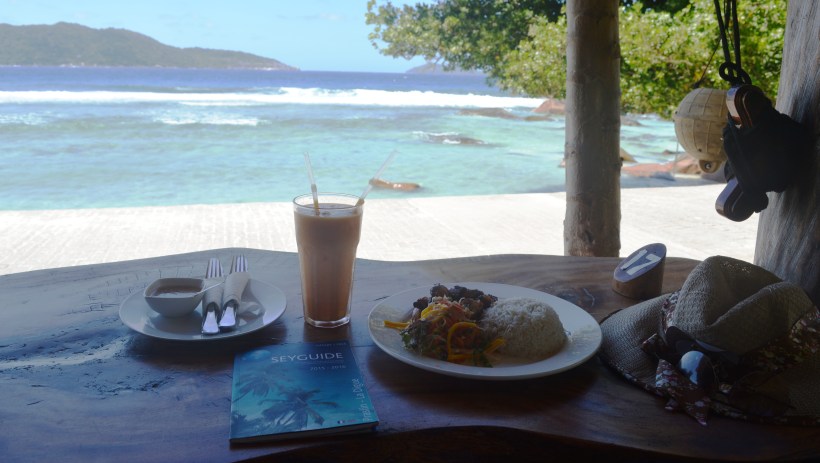
We began our journey towards the east coast keeping in mind that when the Sun sets we will be on the west coast and enjoying the view in the evening. First on the list was Anse Fourmis. This beach is located at the end of east coast road. The place is a solitude early in the morning. We decided to go beach hopping and next on the list was Anse Banane. Anse Banane is probably best-known for its views, as it overlooks the Indian Ocean, as well as four of La Digue’s neighbouring islands: Felicité, Marianne, Grande Soeur, and Petite Soeur. It also offers a few small tourist shops, as well as a small restaurant, Chez Jules, which can be found on the beach. This small snack bar is very popular, offering fresh juice and locally-sourced fruits. In fact, most visitors to this beach will probably spend some time in this snack bar, and the area around here is the busiest section of the beach, with the remaining area remaining largely deserted. After swimming in the beach and post lunch we headed to Anse Patates and Anse Severe.
DSC_0412.JPG
View of Anse Banane from Chez Jules Restaurant

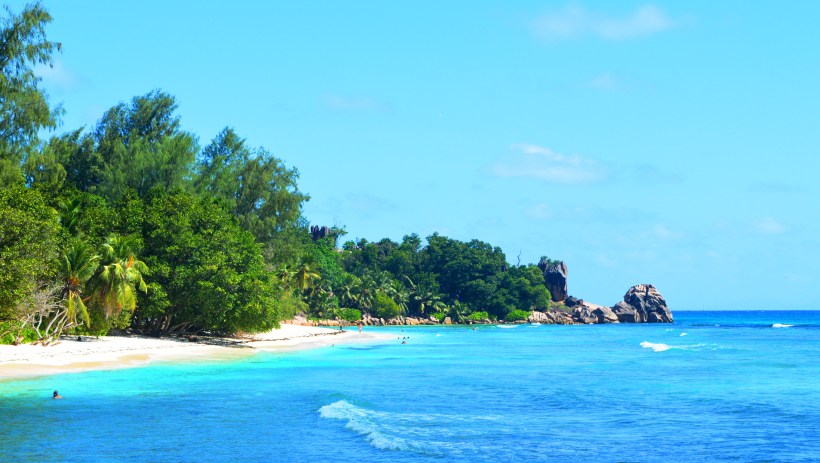
Anse Patates is a small beach, located in the north of La Digue. The beach is rarely visited, making it a peaceful, relaxing option in the north of the island. We spent our afternoon here relaxing in the beach. The locals had told us that If we were lucky we could spot dolphins swimming near the beach. But we weren’t so lucky. After spending the afternoon under the shade of coconut trees we were on our way to Anse Severe. On the way there are many snack bars where one can stopover and enjoy the view along with some food. We reached Anse Severe just before Sunset. Anse Severe is a beautiful, safe, well-located beach that has something to offer everyone. The views of Praslin are excellent, and the water is great for swimming and snorkelling, so there’s always a reason to go.
DSC_0419.JPG
Anse Patates

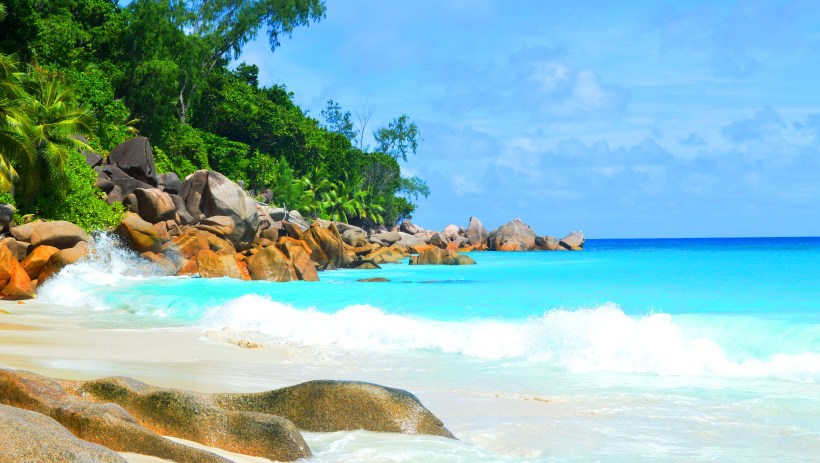
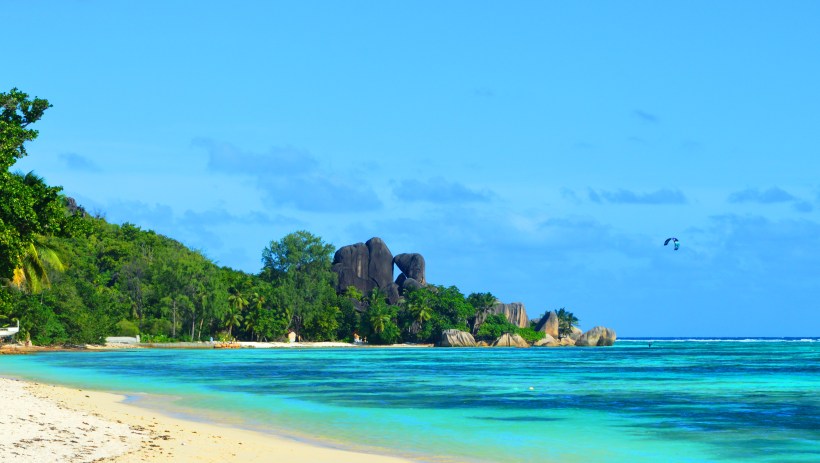
As decided earlier, we wanted to be at Anse Source d’Argent at the Sunset. Anse Source d’Argent, in the south-west of La Digue, has often been described as the most beautiful beach in the world, and it is certainly one of the Seychelles’ most famous attractions. The beautiful mix of turquoise water, golden sand, and impressive boulders makes it a unique prospect worldwide. Access to Anse Source d’Argent is via the Union Estate, which charges 10 Euros per person each day for access, however the outcome is well-worth the fee. Besides this initial entrance fee, access to the beach is easy thanks to several well-signposted paths. The shallow, clear water, as well as the coral reef protection, means the beach is a great spot for families, and is also perfect for swimming and snorkelling. That said, it can be difficult to swim here at low tide, as the water is extremely shallow, but at high tide, the water is deep enough to swim while still being shallow enough to be safe for most swimmers. The protection provided to the beach by the coral reef ensures that the open ocean feels far away, so parents shouldn’t worry about their kids playing in the water. On top of that, the nearby restaurants and fruit stands mean you can easily spend a whole day here if you like. As mentioned, the beach is also famous for having been used in several prominent photoshoots and films, including movies such as Emmanuelle, Crusoe, and Castaway, as well as the famous Bacardi advertisement of the 1990s.
DSC_0428.JPG
Anse Source d’Argent

Next day early morning we were on our way to Grand Anse. The road to Grand Anse cuts through middle of the island and it has splendid views of the flora of the Island. Most visitors to Grand Anse come by bike, although it is also possible to walk here. Upon reaching Grand Anse we were taken aback by its pristine golden-white sand, gorgeous scenery, and beautiful, clear water. Grand Anse is probably best-described as a ‘wild’ beach, but still offers gorgeous scenery and a wonderful sandy surface, making it well-worth a visit. It is much less busy than some of La Digue’ s other beaches, but no less beautiful, making it a more peaceful, serene experience for the tourist. We spent some time appreciating the beauty of the place and then returned to our guest house. It was time to go back to Mahe Island to bid adieu to this beautiful country. We took with us a thousand memories for our lifetime.
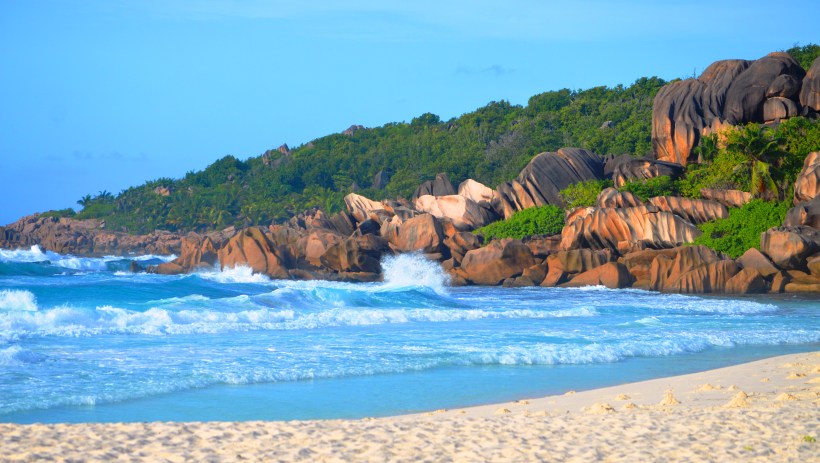
DSC_0462.JPG
Grand Anse @ Sunrise


Travel Pointers:

  1. Try to explore Anse Source d ’Argent at the time of sunset.
  2. While it doesn’t take a lot of time to hike to Anse Cocos and Petite Anse, it is better to keep an entire day aside. This will allow you to enjoy properly. Trust me, you wouldn’t want to reach those beaches only to return in just 15 minutes.
  3. Many tourists first come to La Digue Island directly from Mahe Airport and then explore other Islands of Seychelles to take benefit of the free shuttle available from the Airport to the ferry port.
  4. Always hire a bicycle to explore the island. It is available with most guesthouses at nominal rate. Avoid hiring them at the jetty as it is expensive there. Carry torch for cycling after sunset as there is no street light.
  5. Don’t forget to have a meal at Chez Jules. The octopus curry and tuna steak with coconut sauce are both particularly divine. Feel free to rock up for breakfast (omelettes and fresh juices and smoothies).
  6. Please carry cash for all your expenses.
 

The Creole Tales – IV

Subhayan Bhattacharyya

On the second day in Praslin, we woke up early with the prospects of exploring the two of the most beautiful sites in Praslin. One of them was the beach called Anse Goergette and the other being a nature park named Vallee de Mai.

We started early morning towards the beach as we wanted to feel the serenity of the place, assuming that the place would be less crowded at that time of the day. On the way we saw a road sign board indicating towards Petite Anse Kerlan. We looked at each other and made a grin and we knew we should go there before we head to Anse Georgette. We had heard about Anse Kerlan from our fellow travellers the day before. The beautiful scenery, including a small offshore island, rocky formations, golden sand, and looming palm trees, makes Petite Anse Kerlan a pleasant place to spend some time. It serves as a worthy prelude to Anse Georgette.

DSC_0345.JPG
Anse Kerlan

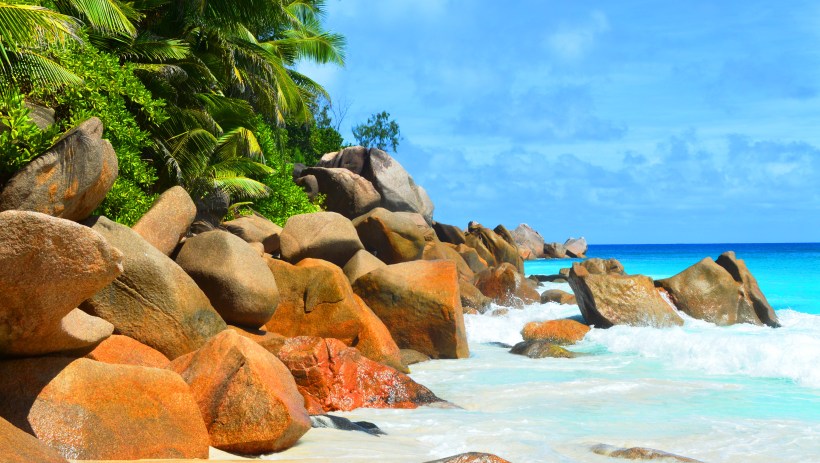
After dawdling on the pink sand at Anse Kerlan for half an hour we headed towards Anse Georgette. Anse Georgette is a stunning beach framed by granite boulders and offers powder soft white sand. Getting to the beach is especially simple for guests of the Lemuria Resort. The hotel offers golf-cart transfers to Anse Georgette on a frequent basis. For non-guests, you should inform the hotel of your visit, then you must make the 30-minute walk down to the beach yourself.

Once you reach the beach, it’s easy to see why people often claim Anse Georgette to be the most beautiful beach in Praslin. The incredible scenery is world-class, with few beaches elsewhere being able to claim such turquoise ocean and perfect white sand. Far from just being an eye-candy, Anse Georgette offers beautiful water for bathing and snorkelling. The water does get deep rather quickly, as there is no protection from an offshore coral reef, so children and unconfident swimmers should always be supervised in the water. The beach is ideal for photographers, with the view from the top of the hill serving as a real highlight of any Seychelles holiday.

DSC_0349.JPG
Anse Georgette

Anse Georgette is one of the few ‘untouched’ beaches in the Seychelles, offering astounding natural beauty. With so many positives, it’s easy to see why the beach is so popular, and guests come from all over the island to enjoy this incredible spot, making it a real must-see for any Seychelles traveller. After that for lunch we headed to Britannia Restaurant. It is located on the way to Vallee de Mai.


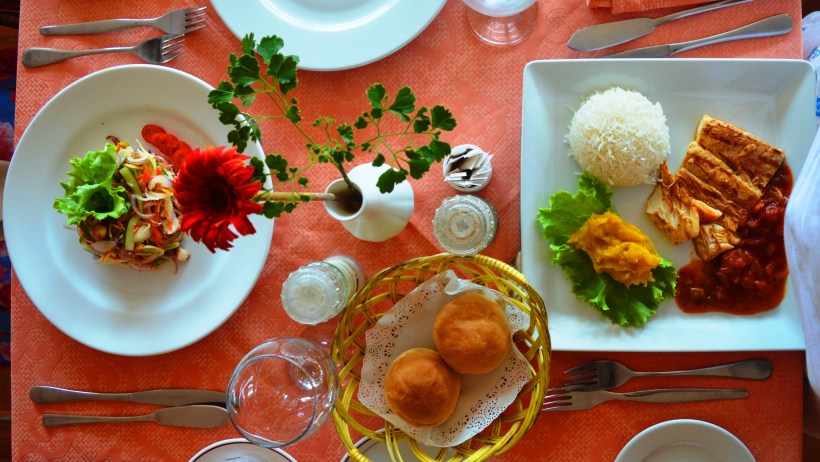
Britannia restaurant is well known for its culinary skills reflecting the pure Creole cuisine passed on from generations and traditions. It has managed to find a compromise between its convivial ambience, warm welcoming, and quality service of a renowned restaurant whilst maintaining a standard of a small “hotel de charme”. We had ordered Octopus salad and Smoked Job fish in Creole sauce. It was yum! After a very satisfactory fill of stomach we made our way towards Vallee de Mai.

DSC_0352.JPG
Lunch @ Britannia Restaurant

‘If you haven’t been to Vallee de Mai, your trip to Praslin is incomplete’, we were told so and now, after having spent a few hours at Vallee de Mai on the island of Praslin, we totally agree. There are some who believe that Vallee de Mai could be the original site of ‘Garden of Eden’. We really don’t know much about the authenticity of the statement, but we do know that a few hours amongst thousands of lush, green Coco de Mer palm trees will surely soothe your eyes and calm your mind.

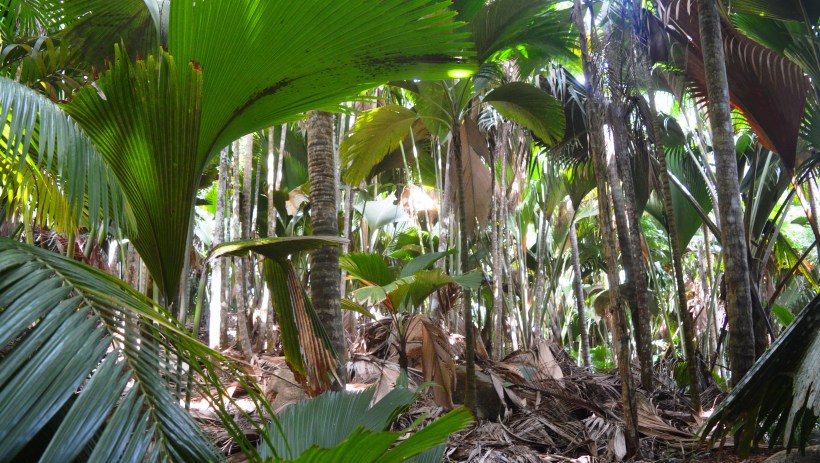
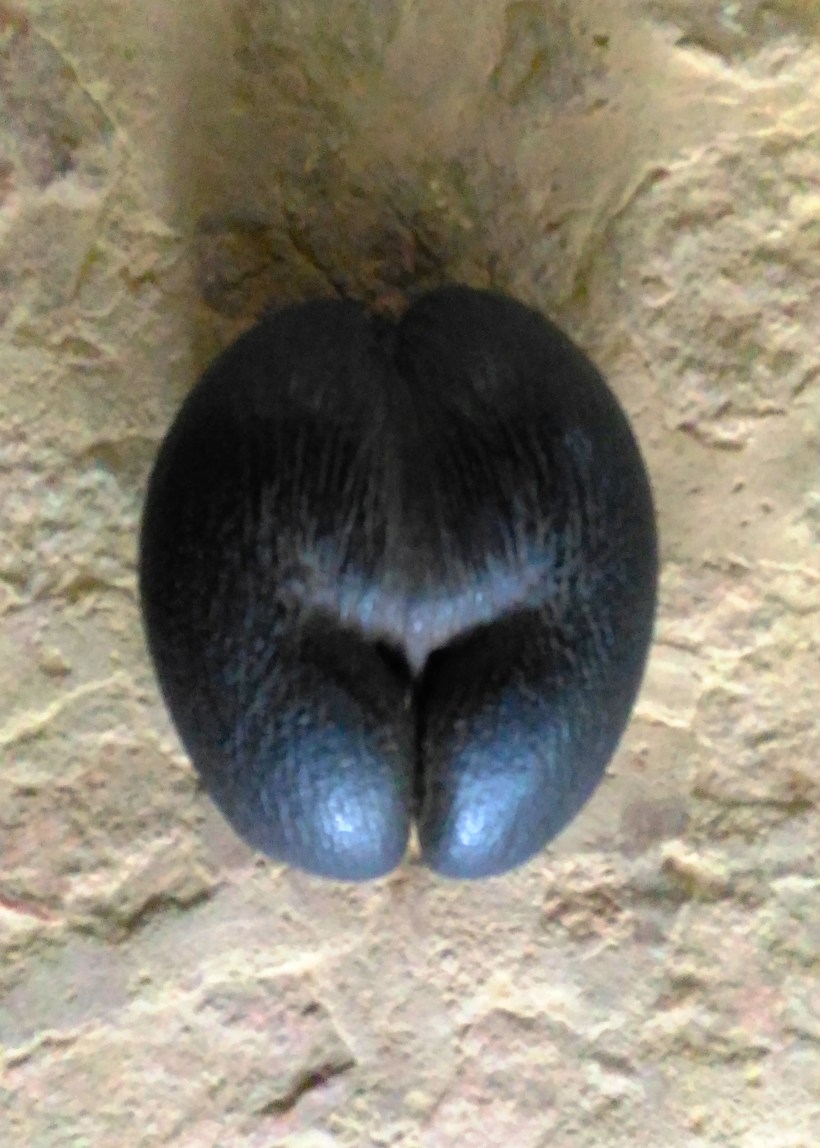
Seychelles is home to two UNESCO world heritage sites – Vallee de Mai is one of them and Aldabra Atoll being the other one. Vallee de Mai is home to over 25% of the world’s Coco de Mer palm trees. The Coco de Mer is a primitive palm, endemic to the island of Praslin and a couple of islands around Praslin (including Curieuse Island). Nowhere else in the world can you find this wonder of the plant kingdom growing naturally. Besides the Coco de Mer palm, Vallee de Mer is home to five other endemic palm species – millionaire’s salad, thief palm, Seychelles stilt palm, latanier millepattes and latanier palm.

DSC_0356.JPG
Flora of Vallee de Mai

Vallee de Mer is home to not only primitive palms but also to the black parrot. The black parrot is found only on the island of Praslin, living and breeding in the presence of the Coco de Mer palm. While we were there, we heard mating calls of the parrots. The national park is home to many more colourful birds including the Seychelles blue pigeons, which are indeed very pretty and the Seychelles bulbuls, which are the loud, cacophonous and territorial. Let not the birdies take your attention off the ground and the trees, where you can spot the bright green coloured day gecko and the Seychelles snail.

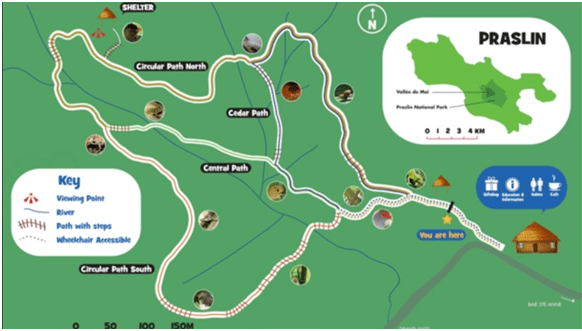
There are three trails that can be used to explore Vallee de Mai… Cedar trail, Central trail and Circular trail. Most tourists end up doing only a part of the Central trail within an hour and head back with only a peek into the world of the Coco de Mer. However, to ensure that you have plenty of photo opportunities, soak in the atmosphere and spare some time for bird watching, we would suggest that you budget about 2 hours on the Cedar trail.

Untitled.png

From Vallee de Mai we headed for Anse Lazio and Anse Boudin in the evening to view the mesmerising sunset, and then settled for the day with the prospect of exploring the most talked about beach in La Dique Island the next day.


Travel Pointers:

  1. Try to explore Petite Anse Kerlan & Anse Goergette at the time of sunset.
  2. Anse Georgette is a stunning beach framed by granite boulders and offer powder soft white sand. Access to this beach is obtained by special permission from Lemuria Resort. (Please note: the hotel sometimes limits the number of visitors, so call ahead and check to avoid disappointment). Another way to reach this beach is by doing a hike from Anse Lazio. The hike is through a rugged road, steep and narrow, moderately difficult. It takes about 30 minutes’ walk. Alternatively, it is also possible to reach Anse Georgette by boat, with some sailing tours stopping in this beautiful bay to enjoy the scenery.
  3. If you want to try some Creole food try Smoked Fish/ Octopus Salad as it is popular in this part of Seychelles.
  4. A Note on Vallee De Mai:
    1.  Vallee de Mai can also be accessed using public transport i.e. the local bus service. The bus stop is just a few steps away from the entrance gate.
    2. The entrance costs EUR 20 and is payable in cash at the ticket counter. Most of this money is used to maintain both the world heritage site – Aldabra Atoll and Vallee de Mai. You are provided with a little pamphlet that has a map when you buy the ticket, which will help you determine which trail you would want to take.
    3. There are free guided tours provided by SIF (Seychelles Islands Foundation). It would be best to contact them a few days before you come to check the timing. We would highly recommend the guided tour.
    4. There is ample place to park your car. Just remember not to park under a coconut tree.
    5. The is a souvenir and coffee shop, which was very reasonable, much cheaper than any other souvenir shops that we ventured into. They sell Coco de Mer here which will cost a fortune. It costs around $ 300 USD. Just make sure that it has the government seal and comes with the export license. If it doesn’t have these things, you won’t be able to leave the country with it, and there’s a chance you could be fined or even sent to prison. Also, be sure to look for any aesthetic flaws.
    6. Wear comfortable footwear that lets you walk for a couple of hours. Use a mosquito repellent cream if you think you need it.
    7. Look carefully for birds and reptiles… they are usually well camouflaged.
    8. Seeds of Coco de Mer were found by sailors and pirates floating on waters of the Indian Ocean and they believed that the seeds were those of a mystical underwater tree. Thus, the name Coco de Mer was coined, which means ‘coconut of the sea’.
    9. Coco de Mer can grow up to a height of over 30 meters, almost as high as a ten-storey building. The palm has a frond of green leaves at its head with leaves as large as 4.5 meters.
    10. The life of a Coco de Mer is typically between 200 – 300 years!
    11. The male and female Coco de Mer tree are different. The palms take about 25 years to reach maturity. Until then, there is no way of distinguishing the male and the female tree. After they reach maturity, the difference is evident.

      DSC_0363.jpg
      Female – Coco De Mer
    12. The fruit of the Coco de Mer typically takes 6 -7 years to mature followed by 6 – 18 months required for germination.
    13. A female tree, at one time, can bear over 6 fruits, each weighing over 20 kgs. That sure is a lot of weight bear for any mom!
    14. The leaves at front join the trunk in a funnel shaped fashion, ensuring that all precipitation is collected and channelled to the roots of the Palm.
    15. The palm, regardless of the weight it carries, has some ability to twist and turn when the winds are strong. The trunk sits into bowl shaped structure that has hole to allow the roots to pass through, very similar to the ball and socket joint, which is held together by muscles.
    16. The juiciest bit is saved for the last! Coco de Mer seed is an aphrodisiac, though scientific studies are yet to confirm the same. Gossip magazines say that the fruit was offered to Prince William and Kate when they were in Seychelles!

The Creole Tales – III

Subhayan Bhattacharyya

The day began with the prospect of an exciting ride from Mahe Island to Praslin. We had booked ourselves a catamaran which took about 45 minutes to reach Praslin. The ride itself was adventure filled with sea water splashing on us time and again. Also the view of the ocean dotted with Islands from top deck of the catamaran is amazing.


DSC_0267
First sight of Praslin


Praslin is the second largest island (38.5 km2) of the Seychelles, lying 44 km (27 mi) northeast of Mahé. Praslin has a population of around 7,533 people and the main settlements are the Baie Ste Anne, Anse Volbert and Grand’ Anse.

It was named Isle de Palmes by explorer Lazare Picault in 1744. During that time it was used as a hideaway by pirates and Arab merchants. In 1768 it was renamed Praslin in honour of French diplomat César Gabriel de Choiseul, duc de Praslin.

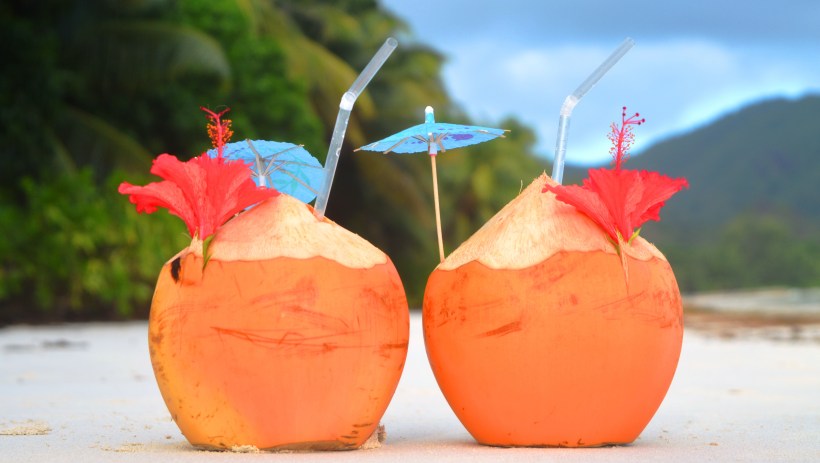
Upon reaching Praslin, we hopped on our pre-booked rent car and headed towards our home-stay on Grand Anse. While driving to Grand Anse, we lost our way and the locals were very eager to guide us and one of them even helped me by driving the car as the lane which I had entered was very difficult to manoeuvre. On reaching Ocean Villa, our home-stay in Praslin, we were welcomed with coconut water decorated with local flowers.

In the evening we took to the waters of Grand Anse and then enjoyed shopping in the local market.  Later at night we tried local cuisine in Praslin.

DSC_0262.JPG
Grand Anse at Sunset

The next day after breakfast, we went on a guided tour to Curieuse Island. Curieuse Island is a small granitic island close to the north coast of the island of Praslin. Curieuse is notable for its bare red earth intermingled with the unique coco de mer palms, one of the cultural icons of the Seychelles, only growing on the two neighbouring islands. We went there by speed boat. Few other people of different nationalities also joined us. On reaching the Island we learnt about the history of the place.

The Island was originally named “Ile Rouge” due to its red coloured soil. In 1768 the French claimed possession of the island, naming it after the schooner “La Curieuse”, a ship that was under the command of explorer Marc-Joseph Marion du Fresne. Like a number of islands in the Seychelles, there was a native giant tortoise population that was quickly extirpated.

DSC_0325.JPG
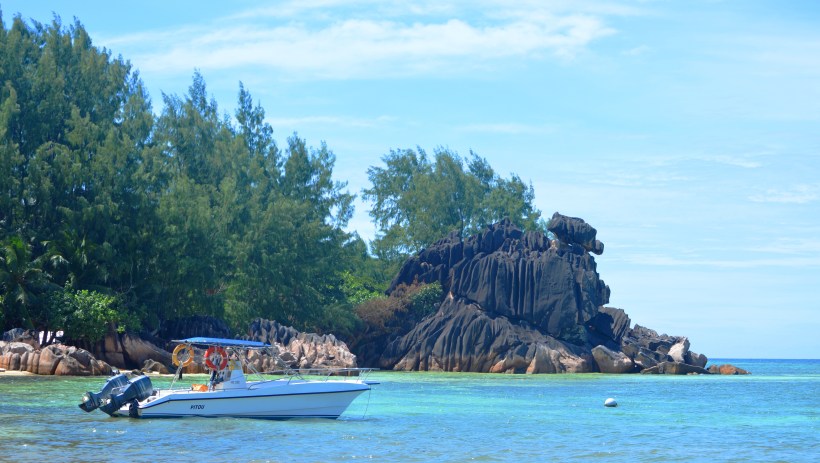
Speed boat parked at Curieuse Island

In 1771 sailors set fire to the island, intending to make harvesting of the coco de mer nuts easier. The fire destroyed many of the islands’ native trees, and indications of the fire can still be seen today, nearly 250 years later.

In 1829, Curieuse was first used as a leper colony, and it functioned in this capacity until 1965. This helped protect the ecosystem from human influence. Today, ruins of the leprosarium remain, as well as the former physician’s residence at Anse St. Joseph (now an educational centre and museum).

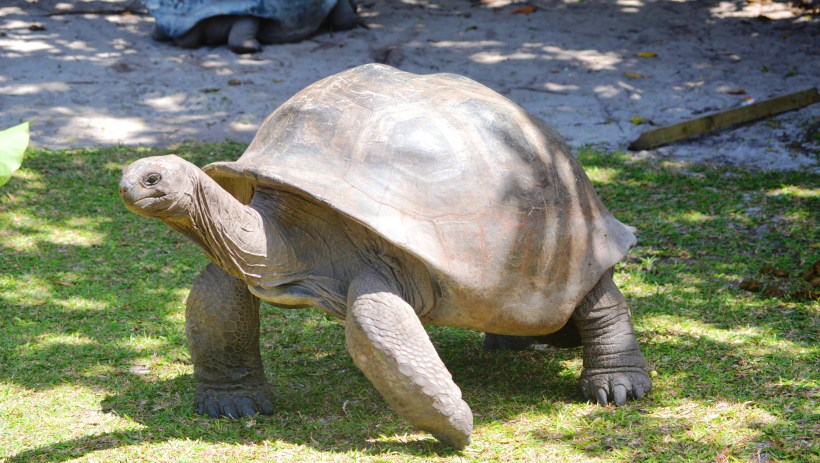
After visiting the museum, we took the trail to Ranger’s station which passes through the mangrove swamp. Upon reaching the Ranger’s station we were surprised to see creep of tortoises. They enjoyed the company of the visitors. Tortoises fed on the leaves and fruits such as banana and apples. We had lunch consisting of avocado and papaya salads, rice with Creole sauce, Job fish cooked on barbeque etc.  Post lunch we went to St Pierre Islet to do snorkelling. It is at a short distance from Curieuse Island.
DSC_0318.JPG
Aldabra Giant Tortoise

The coral of St Pierre was badly damaged in the tsunami in December 2004 and the reef has not yet regained its former glory, but the sea bed is still very rich in fish. The most interesting area to explore (and also the shallowest) lies to the west of the islet (that is, on the Praslin side).

Here and there, the coral is growing back, but has only reached medium size. Fortunately, despite the damaged seabed, St Pierre still deserves its reputation as a natural aquarium. Clown surgeonfish and powder blue tang pass from rock to rock, groups of sergeant major fish play in the eddies, and shoals of fusiliers and jacks dart through the granite rocks.
On the way back to Praslin we were sharing our experiences with fellow travellers and learnt about the things we can still explore in Praslin.
 

Travel Pointers:

  1. In Praslin try to stay on the East coast as there are many diving and snorkelling opportunities.
  2. To have a good diving experience, try with Whitetip Divers (located in the Paradise Sun hotel) or Octopus Divers (located in Anse Volbert).
  3. If you want to try some Creole food try Smoked Fish/ Octopus Salad as it is popular in this part of Seychelles.
  4. Plan to visit one of the nearby Islands; Curieuse, Sister or St Pierre. There are water taxi or speed boats available on any of the beaches or one can inquire at the hotel also. Negotiate the best price including lunch & snorkelling as part of a package.

The Creole Tales – II

Subhayan Bhattacharyya

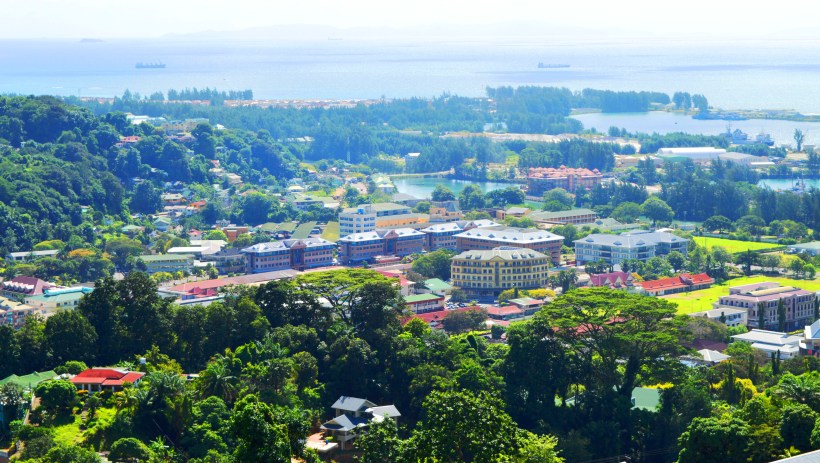
After a fulfilling experience on the beaches of Mahe, we decided to go for a hike in Mahe. Thanks to the topography of the Island, there are many trails and each one of them ends with a mesmerising view of the ocean. After speaking to a local guide in our hotel, we decided to go for the Copolia Trail in Mont Flueri. Why I chose this particular hike after talking to the local?  Simple: it’s the safest, has medium difficulty and at the end of the trail you will see the best view a hike has on Mahe. It is best to go there as early as you can in the morning while temperatures are cool. The hike will take between 45 minutes and one hour and you will need ample water, anti-mosquito repellent, good hiking shoes and a cap. There are spiders on the trail but they are harmless. The view that you will discover at the top is magnificent. Victoria, Eden Island, The Airport, St Anne, Cerf Island, Moyenne and Round Island can be seen from Copolia Platform. You will see also Khalifa’s Palace on the right which is the most impressive building on Mahe. As a bonus to the view you’ll have also the carnivorous pitcher plants which grow at an altitude higher than 600 metres.  Amazingly in none of the forest hikes will you encounter any animal which in a way is certainly safe but disappointing for those who seek some thrill.


DSC_0137
View from Copolia Platform

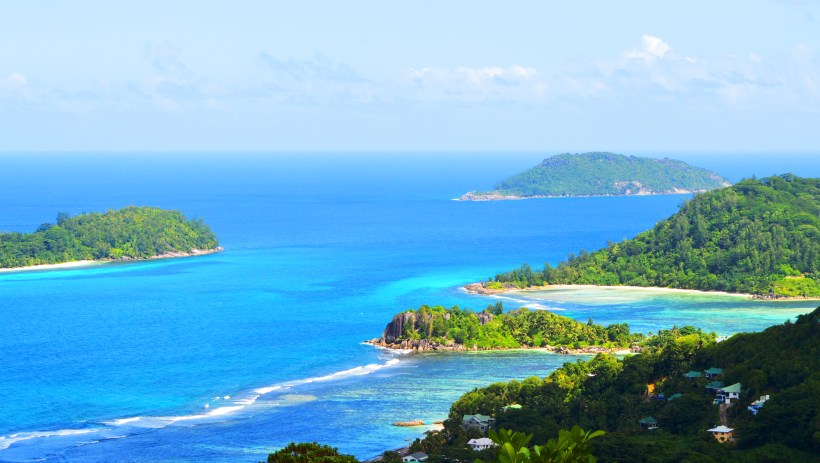
After the descend we rested for a while and then were on way to idle on a beach, the best thing that can be done in Seychelles.  This time we thought to venture further ahead on the South coast road and reach Port Glaud.  On the way we grabbed some snacks and beer.  The road to port Glaud is full of twists & turns and at some places the view of the ocean along with small islands is so mesmerizing that one cannot avoid stopping and take a snap of the landscape.


DSC_0155
The view from South coast road.

On reaching Port Glaud beach, we were disappointed again as we encountered sea weeds. But surprisingly the beach was deserted even at noon time. We spent little time in the shades and clicked snaps of the surrounding to take back home with us.  As the place was devoid of any activity or people, we went ahead to a beach called Port Launay.

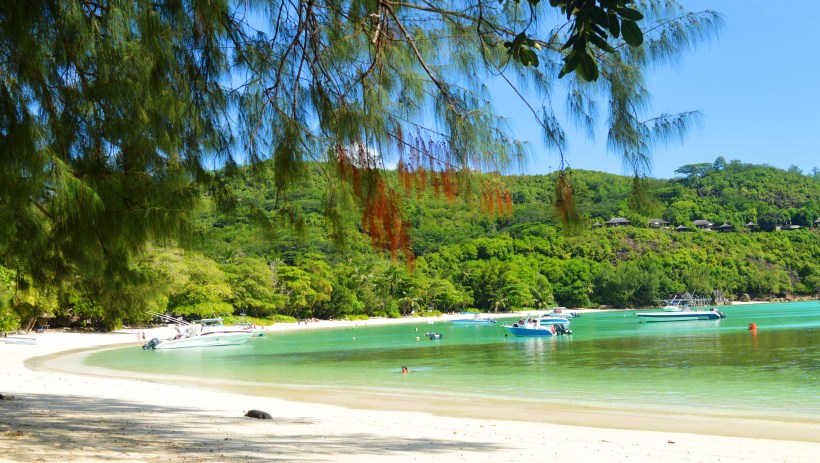
Port Launay with gorgeous scenery, calm, shallow water, and plenty in the way of activities and attractions provided us the opportunity to spend the whole day here. The calm ocean surface lends itself well to swimming and snorkelling, while the numerous rental options mean that visitors can try their hand at surfing, windsurfing, kite surfing, scuba diving, fishing, sailing, or even kayaking and canoeing. Such a variety of activities is rare in Seychelles, making this beach a great option for the more active Seychelles holidaymaker. That’s not to say that one can’t relax here either. The beautiful sandy surface and ample shade ensure that long, laid-back days relaxing in the tropical sunshine are just as rewarding as days spent surfing or scuba-diving.

DSC_0174
Port Launay


As a protected marine reserve the snorkelling here is excellent – both along the rocks to the right of the bay and around the cross marking the mouth of the bay. We snorkelled along the bay and were amazed by the variety of fishes which were different in size and colour. After coming out of the water we had lunch. There was a takeaway van by the road, though sadly it was of the burger and chips variety and not Creole style rice and fish.  We got burgers from there, laid our beach towels and gulped down the food along with beer we had got and then spent the afternoon gazing at the view in the front and reading books.  After that we went to the market in Victoria.

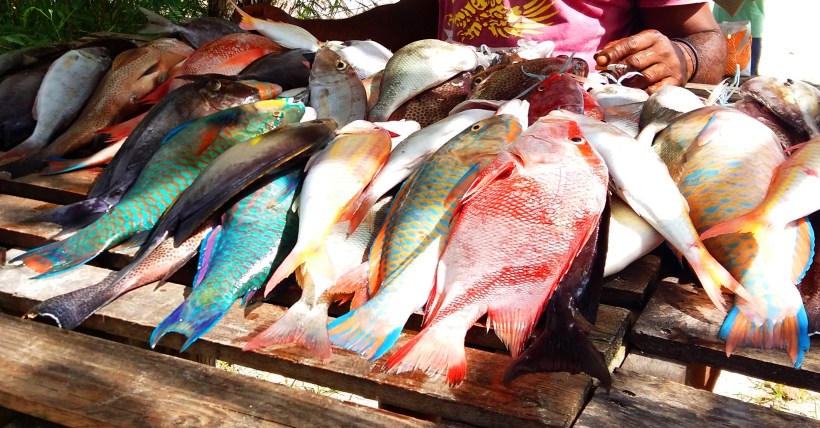
Built in 1840 the market is in the centre of Victoria – known officially as the Sir Selwyn Selwyn Clarke Market, but more widely as the Victoria Market. Victoria Market is a great example of blending the old and new Seychellois way of life. It’s a great place to buy local fruit, vegetables, spices and fishes. The smell of fishes is something that cannot be denied while walking around the market. It’s pretty impressive to see the huge array of fish on offer in the market from parrot fish to barracuda. There is an array of boutiques and shops selling a variety of souvenirs, clothing and local work of art that further complement the lively atmosphere. We stepped in one of them and collected some memorabilia to take back home. The sunlight was fading now and it was time to catch the sunset at Beau Vallon.

DSC_0175
Fishes up for grabs in the Victoria market

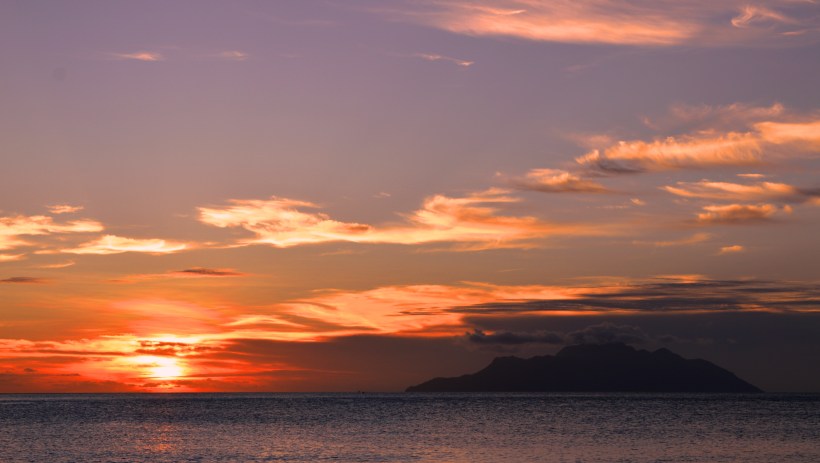
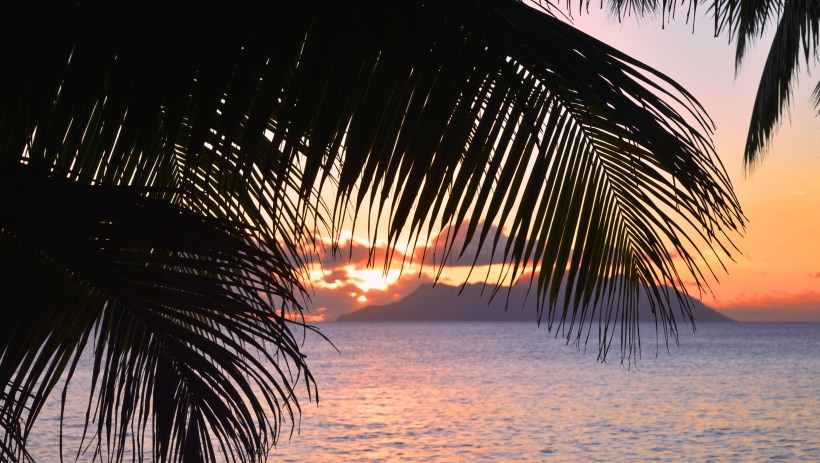
We reached just in time to catch a glimpse of the sunset from Beau Vallon beach with North Island in the background.  Next day we were moving to Praslin: Home of the Coco De Mer.

DSC_0021
Sunset @ Beau Vallon with North Island in the backdrop.

Travel Pointers:

  1. Seychelles is a hiker’s paradise. The hikes one can do in Mahe besides Copolia trail (1.5 hrs, easy) are; Anse Major Trail (1.5 hrs, easy, the only way to get to Anse Major on foot), Morne Blanc Trail (45 min, medium), Morne Seychellois (5 hrs, difficult, takes you to the highest point on Mahe at over 900m above sea level).
  2. When going for a hike carry ample water, apply mosquito repellents and wear hike shoes.
  3. To taste Creole food don’t forget to stop over at Marie-Antoinette. It isn’t just a restaurant; it’s an experience, especially at dinner. It occupies a beautiful, if somewhat dated, wood-and-iron colonial Seychellois mansion. Bring an empty stomach – the menu (set menu of the day) includes fish and aubergine fritters, grilled fish, chicken curry, fish stew, rice and salad, and it hasn’t changed since the 1970s. It’s off the road to Beau Vallon.
  4. The other places to try authentic Creole food in Mahe are: Boat House @ Beau Vallon, Del Place @ West Coast road, Anchor Cafe @ West Coast road, Chez Plume @ West Coast road and Lai Lam takeaway @ Victoria.
  5. For those interested in diving, there are two places in Mahe: Big Blue divers & Blue Sea divers; both are PADI certified and are located in Beau Vallon. For list of dive sites click on the following link: https://www.bigbluedivers.net/divesites.html

The Creole Tales – I

Subhayan Bhattacharyya


When I think of what Paradise would look like, I think of Seychelles. It has everything that one would want in paradise: Gorgeous pristine secluded beaches, uninhabited islands, a tropical climate, and kilometers of reefs. Largely overlooked and located directly on the equator in the Indian Ocean, visiting Seychelles is a dream come true.

DSC_0085
Paradise on Earth

It almost takes a month’s time of meticulous planning to put thoughts into action. Unfortunately, isolation and a pristine environment come with a price, and a trip to the Seychelles will cost you handsomely. This is not a budget destination whatsoever.  But there are certain tricks which can help you economize, which I will mention in the later part. That being said, ‘Paradise’ is worth the price!

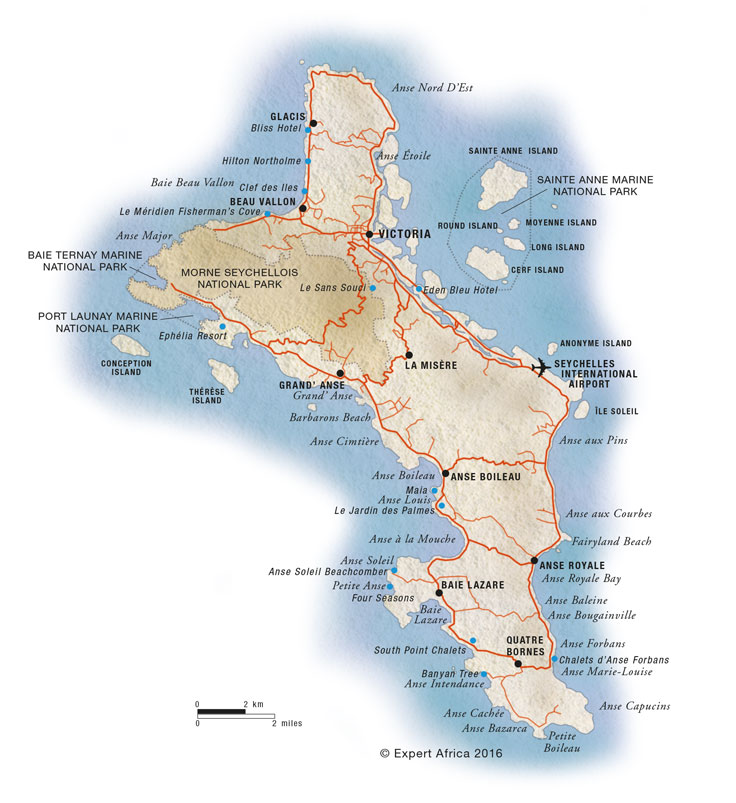
We stayed in 3 Islands in Seychelles namely Mahe, Praslin & La Digue. The First part of our Seychelles blog will focus on Mahe Island. Mahe is 28 km long and the largest of the 115 Seychelles islands. With almost 77.000 inhabitants, it’s home to roughly 86 percent of the total population of the Seychelles. Boasting of not only the international airport, Mahe is also the location of the city of Victoria, the smallest capital city in the world.

Seychelles-Mahe-map

A trip to Seychelles calls for some luxury…at least for a couple of days. The blue waters and golden sands appear even more splendid if you have pretty cocktail in one hand, a book in the other and your back is comfortably rested on a beach lounger plonked under a tall coconut tree!  Though there are many B&B options available in Mahe, we chose to spend our 3 days in the Berjaya Resort on the world famous Beau Vallon beach. The beach is easily accessible from the hotel and is overlooked by a hill making the view from the beach stunning on either side.

DSC_0055
Berjaya Beau Vallon Resort

We arrived in the afternoon from India, cleared our immigration, then hired a car for 3 days and went to our hotel. After Check-in we straight headed for the beach. The Sunset at Beau Vallon is amazing and for the next 3 days we were always there right in the nick of time to watch the sunset. After watching the Sunset we made our plans for the next 2 days. We sought help from the tourist help desk of the hotel and chalked out a plan. There were hits & misses. We couldn’t plan our scuba diving or snorkeling in Mahe as there were too many beaches and trails to be visited. In the evening we wanted to try some Creole food. After some searching we arrived at a place which was easy on the wallet and served good food. We ordered our supper, the highlight of which was the Octopus curry. For non-vegetarians Seychelles is Heaven, though most places serve vegetarian food as well. There were few dishes which we had in mind and wanted to try – Octopus curry was one of them.  After dinner we called it a day, eagerly waiting what Seychelles had in store for us and particularly the Island of Mahe.

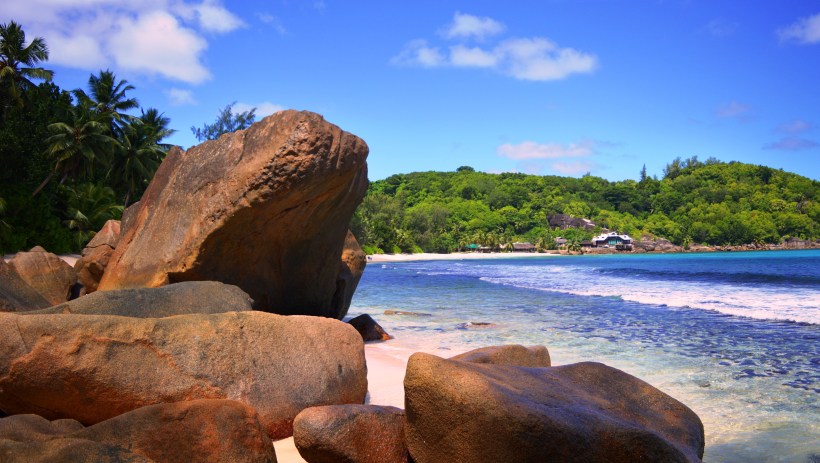
Next day we woke up early to stroll along the Beau Vallon beach. It was a serene experience with the Sun rays peeking from behind the trees and various birds playing around among themselves before human activity could disturb them. After a sumptuous breakfast we moved ahead according to our plan. The first beach we hit was Anse Royale. The beach is alongside the South coast road. It covers a small area. The problem with this place was in the month of May the water is full of sea weeds, hence we couldn’t venture out in the water. But it was our first experience of large granite stones on sand, for which Seychelles is famous for and we see them featured in all the postcards of the Island. We clicked few snaps, climbed on the granitic stones and lazed around for an hour but were disappointed because of sea weeds.  Our next destination was the beach of Anse Intendance, but we skipped that and decided to go further to Anse Takamaka on the South coast road.  On the way we bought some snacks & cans of beer from a local store.

DSC_0065
Anse Royale

On reaching Anse Takamaka we were a bit skeptical about sea weed, as it had already played a mood dampener in Anse Royale. But to our surprise the beach was clear of any sea weed and had crystal blue water and to add to that the experience of a secluded beach which we had heard of but never experienced. We had the whole beach to ourselves for quite some time. We discovered the complete beach by walking from one end to another leaving our footprints on pristine powdery sand. We were even scared by coconut falling from tree right next to us due to the swaying because of gusty winds. Sitting under a coconut tree we savored the view of blue waves lashing the shore and some local children playing and fighting the waves, which reminded of our own childhood days. It was about noon time, so we decided to move to our next beach which was Anse Intendance, which we had skipped earlier.

DSC_0077
Anse Takamaka

We drove back along the South coast road and reached Anse Intendance. To reach the beach one has to go through the village and then the premises of the Banyan Tree Hotel. Anse Intendance was another secluded beach and a piece of paradise. We changed into our beach attire and jumped into the sea water. There were warning signs of high current so we didn’t go deep but enjoyed and swam along the beach only. The waves were very rough and making roaring noise, but we enjoyed fighting them each time.  As we were hungry, we munched on to the snacks we had got and relished a pint of local beer ‘Sey Brew’.  After sometime we again hit the waters and felt like never coming out of it. But again we didn’t want to miss out on the sunset which was not possible to view on this beach. So we drove back to Beau Vallon.

DSC_0112
Anse Intendance

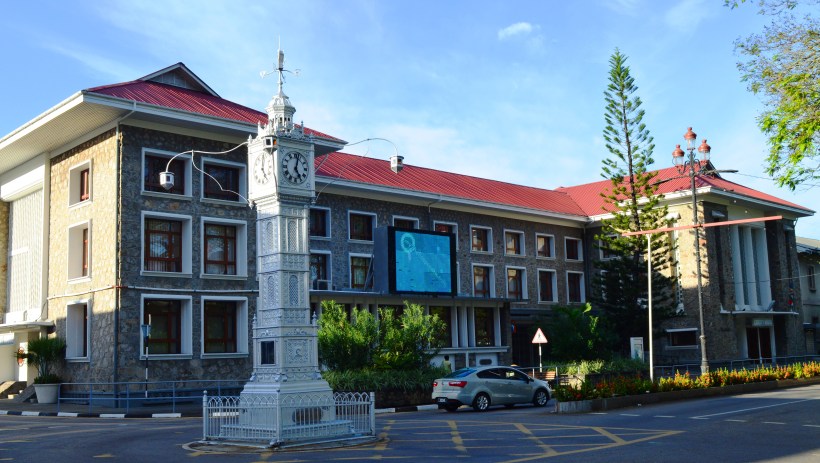
On the way to Beau Vallon we made a small stopover at Victoria, World’s smallest capital. This city has only one square which is decorated by a clock tower. There are only food joints, souvenir shops, banks and tourist operators in the capital. We were amazed as by 4 pm the whole place was deserted and all the shops were closed except for a few food stalls. We had hot-dogs at one of the food stalls, and then went to a food joint for coffee. We noticed that very few people were there at the joints. Most restaurants & food joints are devoid of Wi-Fi and the people here converse about way of life and the happenings in surroundings with one another on a coffee or dinner table in the old world way. Even tourists seem to enjoy this fact. Soon we finished our coffee and headed towards Sunset beach, which is an extension of Beau Vallon beach to view the sunset. It was a beautiful picture. The clean atmosphere and the brilliant colours made the sunset absolutely splendid.

DSC_0117
Clock Tower at world’s smallest capital: Victoria, Mahe

We returned to Beau Vallon as the Sun sunk in the distant horizon. As we slipped into the calm night, we reflected on how the day passed by and were excited for the next day.

DSC_0129
Sunset @ Sunset Beach


Travel Pointers:

  1. Seychelles is a visa-free country meaning that there are no visa requirements for any person wishing to travel to this country.
  2. It’s a good idea to make Mahe the last stop of your island hopping journey. After landing at the airport you should take advantage of the free shuttle bus to the port of Victoria. From there you can go by ferry (Cat Cocos) to Praslin and La Digue (travel time: 60 minutes). We were not aware of this provision.
  3. Look for B&B if you are a budget traveller. There are many options available. (Try Airbnb!)
  4. Euro is the widely accepted currency along with SCR. But try to keep the SCR as the shop owners will give you change in SCR even if you give them Euros and avoid the transaction loss.
  5. Plastic currency is accepted in all the stores, restaurants & hotels, except in Petrol pumps where I suggest you may pay in SCR.
  6. You can eat relatively cheaply here if you steer away from hotel restaurants. For a basic meal, expect to pay around 175 SCR. A nicer meal with table service will cost around 400 SCR. Fast food will cost around 120 SCR while a beer is usually around 45 SCR. If you are planning to cook your own meals, expect to spend at least 1,000 SCR per week on groceries.
  7. Check for sea weeds with the locals before planning to go to a beach. Sea weeds play a major dampener as one cannot venture out in the water.
  8. A lot of travelers take the local buses on the island of Mahe and Praslin. While this is the cheapest option, it takes away the flexibility of doing things as per your schedule. Also, if you have anything more than a backpack, boarding the bus is at the driver’s mercy.  Taxi is very expensive; an average trip of 7-8 km will cost you about 40 – 50 Euros. Instead rent a self drive car for 40 Euros per day for unlimited kilometres. Read and understand the terms & conditions carefully before renting a car.


Just Got Leh’d – Part 3

 Monjira Bhattacharyya

Words fall short of describing PANGONG Tso. Yes!! You read it right the very famous PANGONG LAKE.

Well to say Pangong Tso was made famous by Bollywood actor Aamir Khan in his movie 3 IDIOTS. Don’t we all recall the final scene wherein actors Aamir Khan & Kareena Kapoor confessed their love on the banks of a beautiful lake & Kapoor drove a yellow scooter?

Post completion of 7 hours drive from Nubra Valley; negotiating an extremely rough hilly terrain once we stepped onto the banks of the lake.  I was mesmerized by its sheer beauty; as an afterthought I would be disparaging the location if I say that a movie made Pangong Tso famous rather it is the other way ‘round. Isn’t it the picturesque locale which MAKES a movie?

DSC_0222.JPG

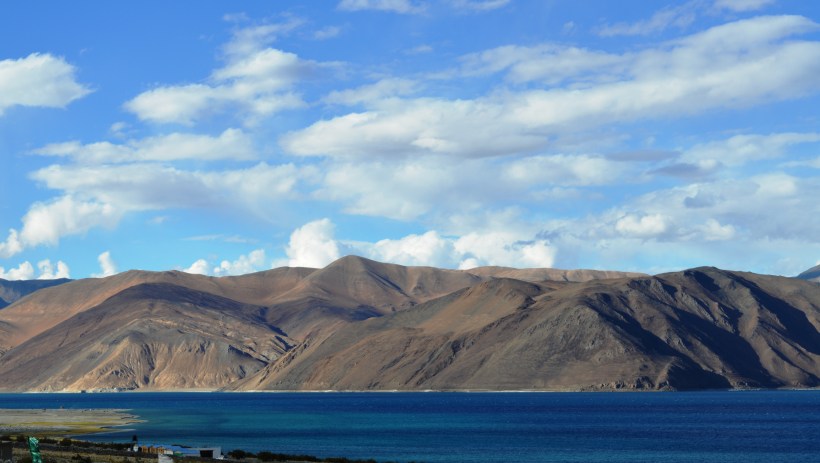
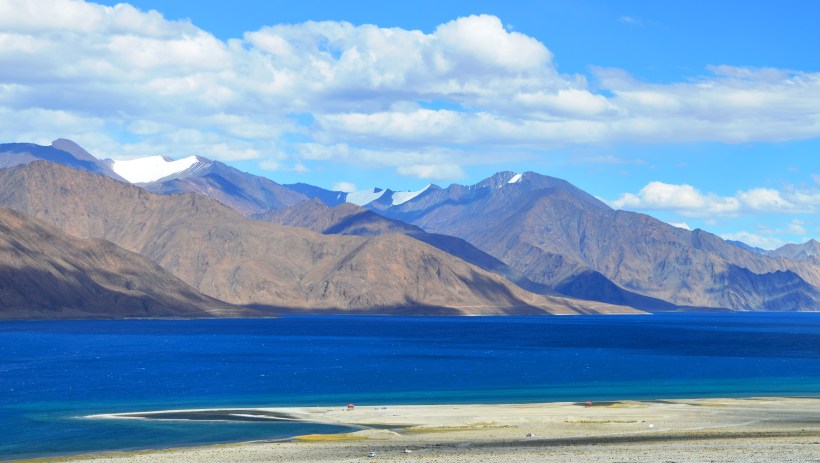
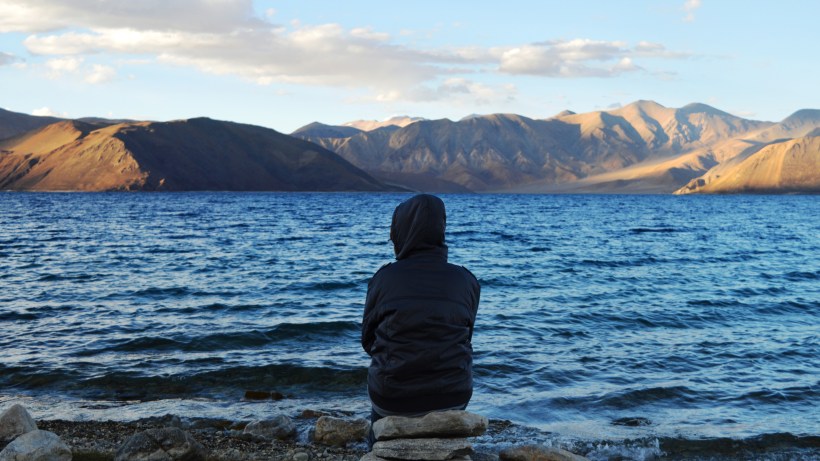
The panoramic view of crystal clear water commands attention of the viewer. It’s simply majestic the lake gracefully flows across the mountains. I sat on the banks of the lake closed my eyes for few seconds and tried to soak in the serenity of the atmosphere.

DSC_0237.JPG

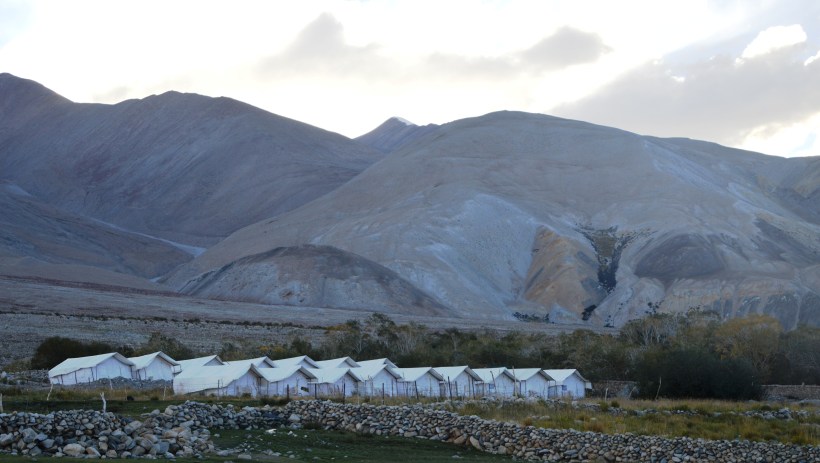
One would be awestruck by the cyclorama of the surrounding landscape. Majestic Himalayan Range, tents at the foothills of the mountain, incredibly beautiful lake; such an ambiance will surely tempt every soul to visit this place at least once in their lifetime.

The name “Pangong Tso” in Tibetan means “High Grassland Lake” as the name suggests it is situated at an altitude of approximately 14,270 ft. It is about 134 km long stretch running between India & Tibet (a region now under the control of China). Nearly 70% of the lake flows in Tibet. The best time to visit is between June to September as rest of the year it’s frozen and ice skating competitions are held wherein skiers & ice skaters across the globe participate.

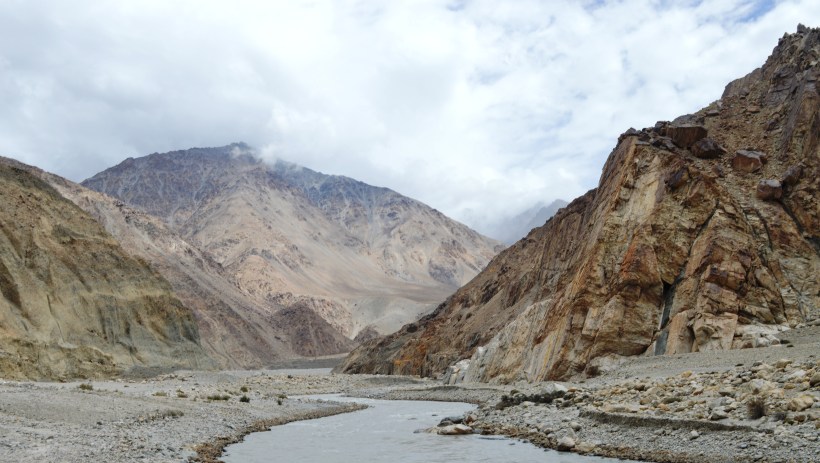
It is one of the largest brackish lakes in Asia & guides report that there are no fish or other aquatic life in the lake. It is approximately 5 hours drive from Leh City. We made our journey from Nubra Valley and drove past the Shyok river. Enroute we witnessed the beautiful Ladakh countryside & the mountains in the background appeared to be painted in different hues of brown, red & yellow.

DSC_0200.JPG

There were numerous tents for tourists at the foothills of the mountain; we stayed in one of them. It was very comfortable and reasonably priced. We had scrumptious dinner at camp site least to say that it satiated our palate. The day came to an end & next morning we commenced our journey way back to Leh.

DSC_0236.JPG

The first glimpse of the tranquil, azure blue waters and pebbled lake shore will remain etched in our hearts forever.

Ladakh is truly a Paradise on earth!!

Travel pointers:

  1. September & October are the best time to visit Pangong Tso to see full glory of beautiful shades of blue colour.
  2. Starting May 2014, Indian Tourists do not need Inner Line Permits for Pangong Tso Lake.
  3. The nearest basic medical health centre is at Tangste Village about 50 km. You can get basic first aid including Oxygen doses at most of the tents/camps.
  4. You will not find any ATMs near Pangong Tso lake and hence, it is always better to carry cash from Leh (the only place where you find ATM in Ladakh) itself.

Just Got Leh’d – Part 2

                                                                                                                 Subhayan Bhattacharyya

On day 2 we started our drive towards Nubra Valley from Leh. To reach Nubra valley region from Leh, one has to cross the very treacherous Khardung la. We started early morning so as to catch the glimpse of rising Sun taking its effects on snow capped mountains.DSC_0122.JPG

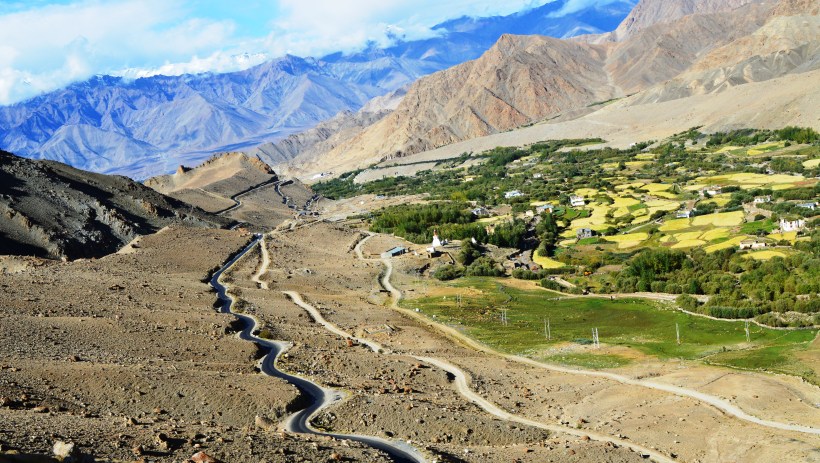
The road to Khardung la has winding curves right from the beginning and there is not a single moment when you can take your eyes off the valley beneath.  This pass on the Ladakh Range lies north of Leh and is the gateway to the Shyok and Nubra valleys. The Siachen Glacier lays part way up the latter valley. Built in 1976, it was opened to public motor vehicles in 1988. It is maintained by the Border Roads Organisation, the pass is strategically important to India as it is used to carry supplies to the Siachen Glacier.  Historically also, Khardung la was important as it was part of the Silk route from Leh in Kashmir to Kashgar in Central Asia. About 10,000 horses and camels used to take the route annually.

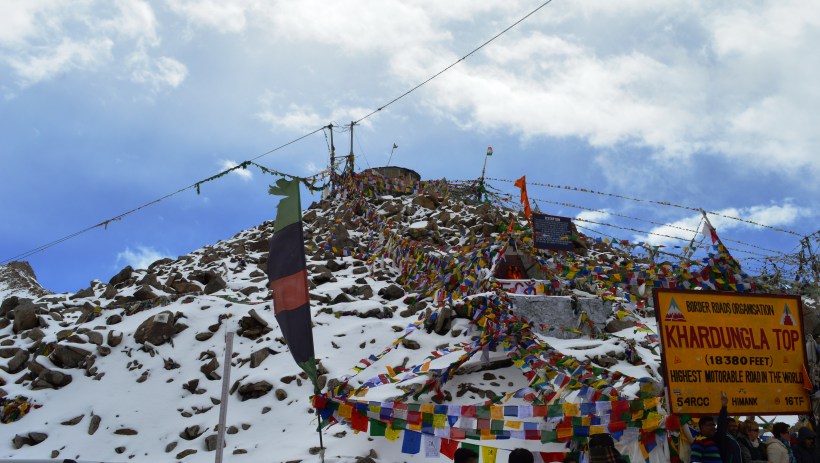
The pass is at a height of 18380 feet as claimed by the sign boards there, which also claims that it is the highest motorable pass in the world. The claim is disputed by experts, but that doesn’t take the charm away from this place. There is an army outpost there which helps fatigued travellers in case of any emergencies.  It is not advisable to stay there for more than 15 minutes as the oxygen level is very low.

DSC_0145.JPG

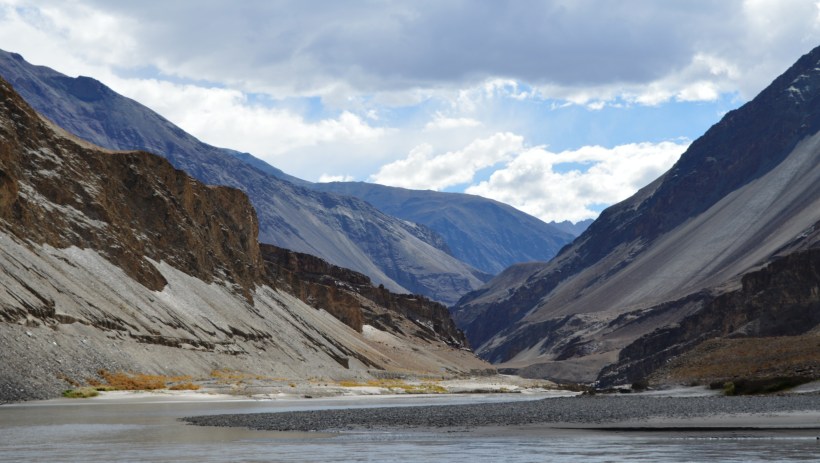
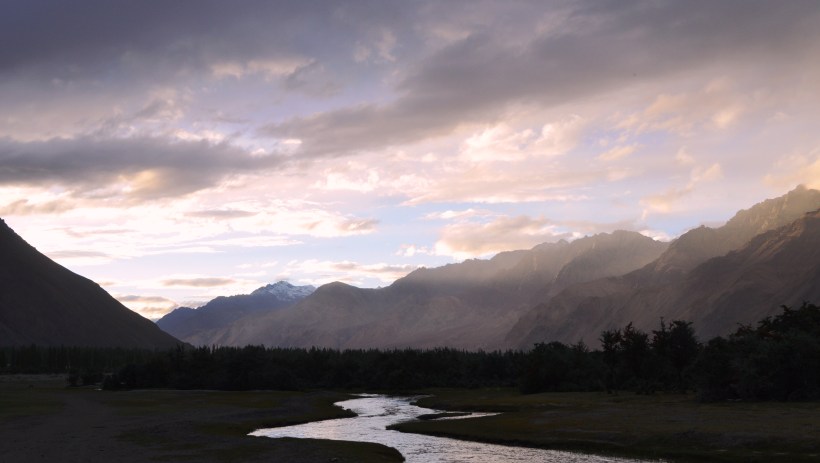
After a short pause at Khardung la, we started towards Nubra valley. The road downhill is very steep and requires good driving skills to negotiate the turns. As we drove, the landscape comprised of huge mountains and vast uninhabited hinterlands.  After the downhill drive was over we had the constant companionship of Shyok River throughout our drive to Nubra valley for rest of the 70 kms.  On the way we stopped at Khalsar, which is a small village of about 100 people as informed by the shopkeeper who was serving the tea and it was the only village in the vicinity of 50 km. From Khalsar it took us about one hour to reach the austerely beautiful Nubra valley.

DSC_0173.JPG

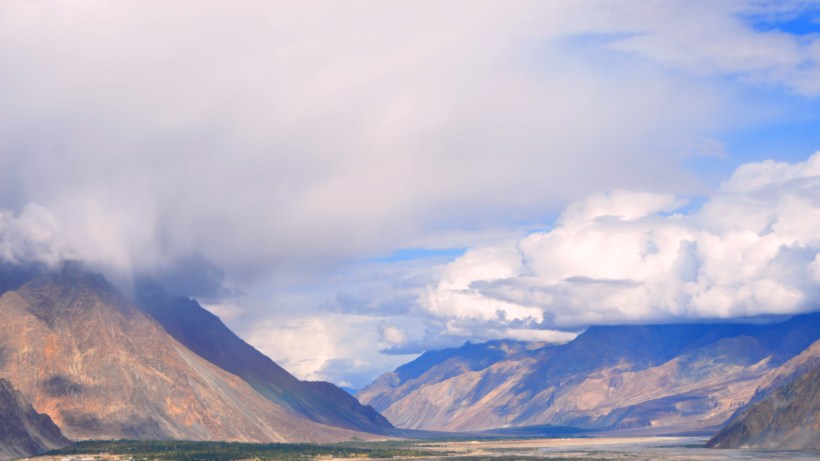
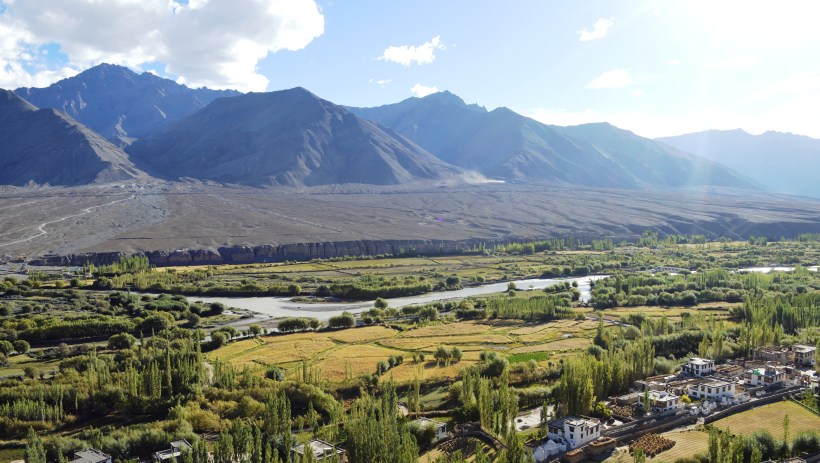
Located across Khardung La is the charming Nubra Valley. Its original name is believed to be Ldumra meaning “Valley Of Flowers”. This beautiful valley is located at a height of 3048 meters, an average altitude of about 10,000 ft (3048 meters) which actually puts it at a lower altitude than even the town of Leh. Diskit is the capital of Nubra valley and is located about 120 kms from Leh. Shyok River confluences with Nubra River (also known as Siachen River) to form this enchanting valley that separates the mountain ranges of Ladakh and Karakoram.

DSC_0172.JPG

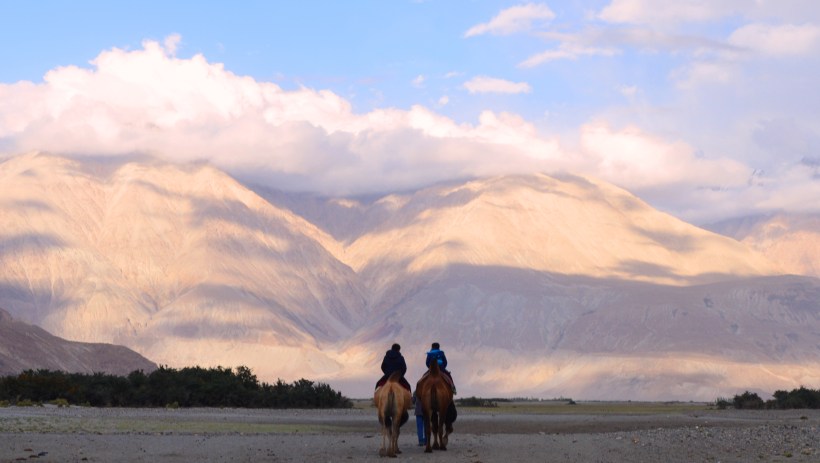
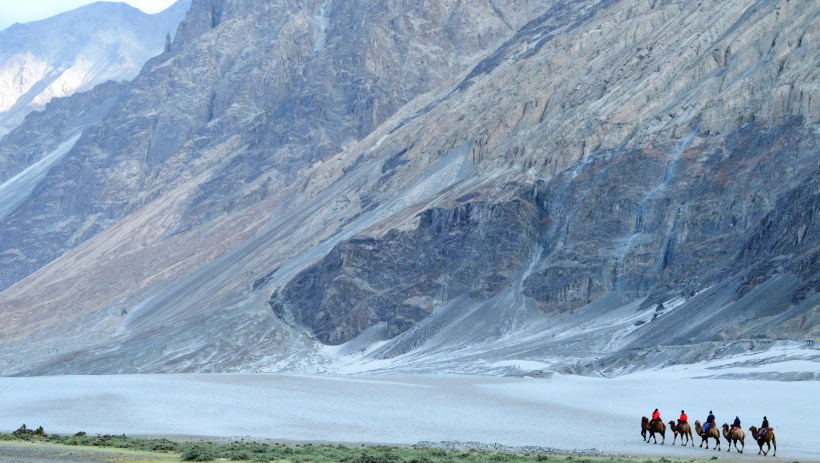
We had booked a tent in the village called Hunder.  It is amidst fruit orchids and is famous for its sand dunes. If you staying at Diskit for the night, and if you are lucky enough for this to be a full moon night, do not miss the sight that these sand dunes present under a full moon. Another amazing thing you will get to see at Hunder is the Bactrian camel, or commonly known as two humped camels. Yes, that’s right. Unlike the regular camels, this one has two humps on its backs, which were used by caravans using the Silk route in olden days. You can even get a ride on this camel at Hunder on the sand dunes if you are willing to pay. The view of the setting Sun usurped by the huge mountain range in the evening is very amazing along with the soothing noise of flowing water of the river.

DSC_0182.JPG

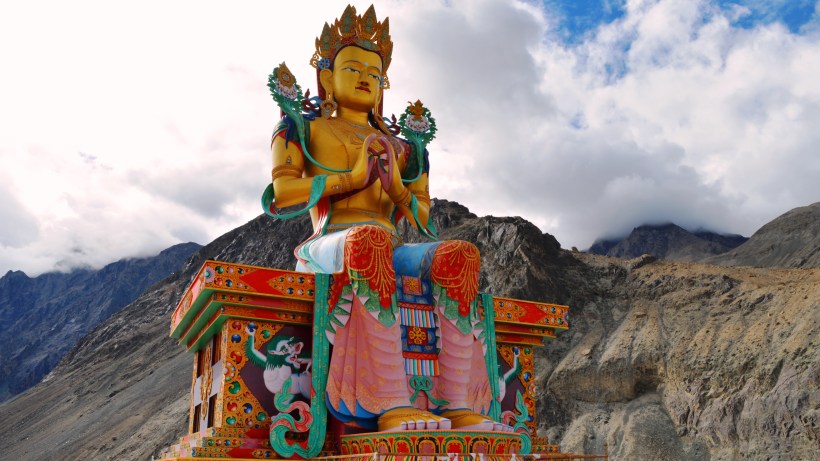
Also one must pay a visit to Diskit Monastery. It was built in 14th Century. There is 32 metre tall statue of Maitreya Buddha near Diskit Monastery facing down the Shyok River towards Pakistan. The platform of the Monastery offers glorious views of the Nubra Valley.

DSC_0192.JPG

As the night descended we enjoyed our dinner alongside performance of local folk dance and then retired to our tent early with the promise of a view of Pangong Tso next day.

Travel Pointers:

  1. Take 2-3 litres of water per person when travelling. Also keep chocolates and confectionaries with you. Carry medicines for altitude sickness and nausea along with you.
  2. Don’t wait for more than 15-20 minutes on Khardung la top, as the oxygen level is very low.
  3. As Indian Nationals or Tourists, you only need to present your valid Photo ID Nationality Proof at the ITBP/Army check-posts. ID Proofs such as Driving License, Aadhar Card, Indian Passport, PAN Card, etc., will just acts as permit for you.
  1. For Foreign national Travellers in Ladakh, Jammu and Kashmir government has relaxed the Protected Area Permit (PAP). The government has allowed the foreigners to visit restricted areas in Leh district of Ladakh. Foreign tourists will now be permitted to visit Nubra Valley in Leh.
  2. Gyantse restaurant in Diskit serves local ‘Balti’ dishes and good chinese food.
  3. There are many home stays available in Hunder village which one can get easily after getting there.

Just Got Leh’d – Part 1

                                                                          Subhayan Bhattacharyya

Some places we plan to go our whole lives but barely make it, and then there are places where we are just destined to go. Leh happened to be the later one for us. It happened in a fraction of a moment. The morning started as a normal monotonous day and in the evening we were on our way to Leh.

We were on an early morning flight to Leh from Mumbai. After 2 hours 45 minutes, having travelled 1079 miles northward and 11550 ft upward we stepped out into the former capital of Kingdom of Ladakh – ‘The land of the passes’. As we stepped out from our flight at Kushok Bakula Rimpochee Airport, the chillness in the air and the altitude of the place hit us immediately.  Hearing of heartbeats, finding it difficult to catch breath and chattering of teeth are symptoms that you are in the high altitude of Leh. It is recommended to take rest for one complete day before hitting the roads, so that the body gets accustomed to high altitude.

DSC_0022.JPG


After the recommended rest, we ventured out in the local market of Leh in the afternoon. There are many eateries dishing out local Himalayan delicacies. Don’t miss out on trying Thukpa, Tigmo,or the Yak cheese locally called as Chhupri. Also you can sip to a Qahwa, it contains saffron and cinnamon that help keep the body warm. Another thing not to be missed is the butter tea. The tea is made with butter and salt. It is not served everywhere; the tea looks pink and tastes salty. The butter helps keep lips from getting chapped in the harsh cold weather and the salt helps to stay away from altitude sickness.

DSC_0074.JPG

After spending some time in the local market, we were headed for the place which is the confluence of river Indus & Zanskar. The confluence at the backdrop of the mountains makes for an amazing sight. One can see the different colours water mixing. We were not able to do river rafting due to lack of time. After spending some time here we went to Gurudwara Pathar Sahib. This place has a very interesting folklore attached to it. We had a cup of tea and were compelled to drink another cup because of the sheer taste of it.

DSC_0057.JPG

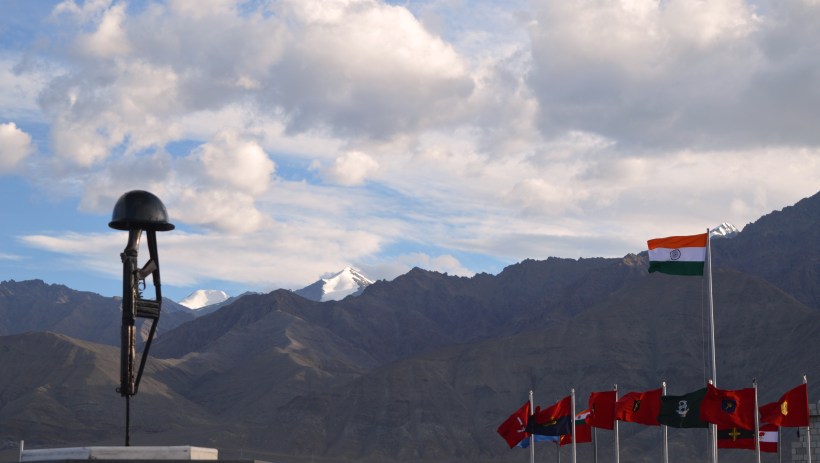
Then we were headed for The Hall of Fame museum in Leh. Two rooms of this extensive, well-presented museum look at Ladakhi history and culture. But mostly it commemorates the Indian Army’s role in Ladakh, from helping with cloudburst relief in 2010 to the high-altitude battles fought with Pakistan during the 20th century. This building consists of two floors. While on the ground floor, there is information about the brave soldiers but on the first floor, there are artifacts of various wars (mainly Kargil war) such as the weapons used during the war and some important documents, related to the same. There is another section dedicated to the Siachen glacier. There is a war memorial in memory of the soldiers who fought the 1947 war.

DSC_0080.JPG

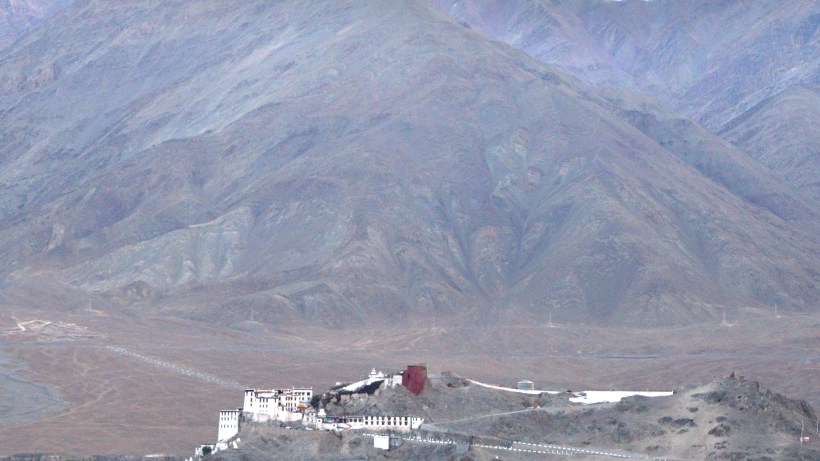
After witnessing the last call ceremony at the war memorial, we visited the Spituk Monastery before calling it a day. The monastery contains a giant statue of Goddess Kali and is around 5km from central Leh, incongruously perched overlooking the Leh airport runway.

DSC_0105.JPG

Travel Pointers

  1. Once in Leh, the most important part is to get acclimatized. Thus take rest for a full day and don’t be in a hurry. Don’t walk around too much. After the first couple of days most healthy people adapt.
  2. Do not drink alcohol. If you feel sick, take medicines which you should get prescribed by your doctor before you travel. Drink lots of water. Keep a litre of water per person in backpack when travelling.
  3. Plastic is officially banned in Ladakh.
  4. Carry hard cash – credit/debit cards are mostly unaccepted.


Niagara of Karnataka!

                                                                Monjira Bhattacharyya

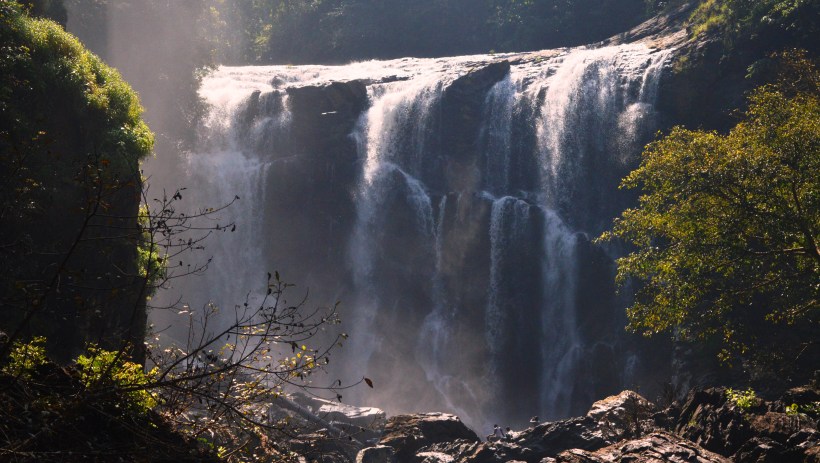
It was a day to remember. It was our maiden trip to the lesser known Sathodi Waterfalls in the Indian state of Karnataka. I think in comparison to Karnataka’s Jog Falls; Sathodi Falls was a more delightful sight to behold. Unfortunately it has never got its share of limelight.

DSC_0009.JPG

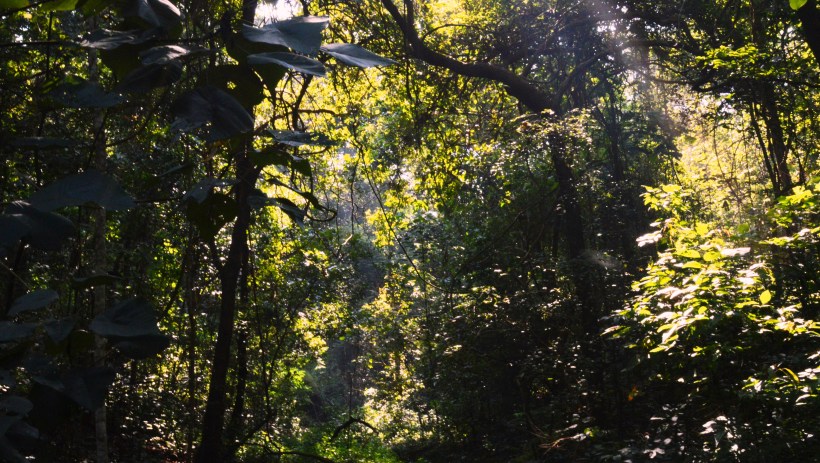
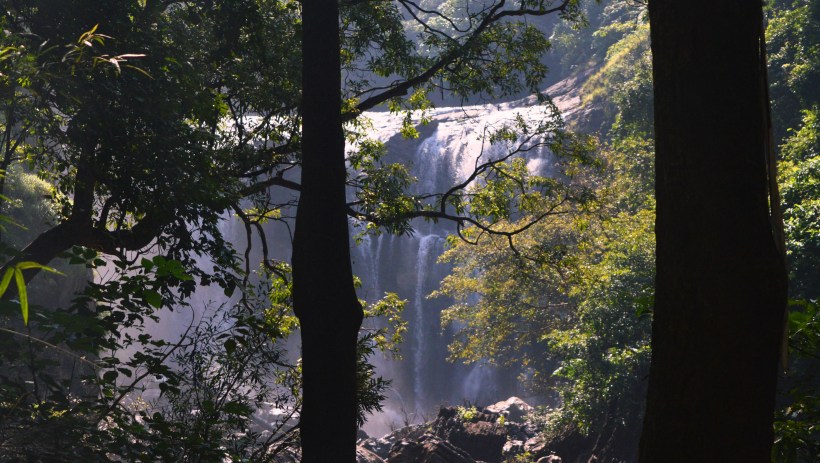
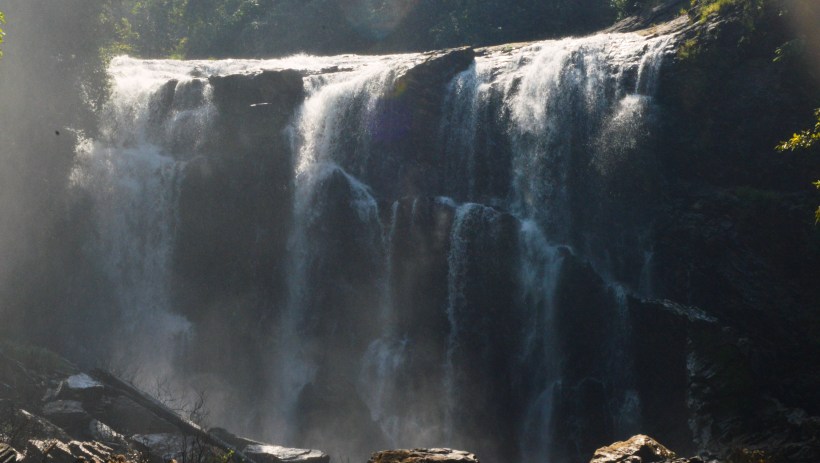
Nestled amidst the dense forest lies the mighty falls. The waterfall is formed by several unnamed streams near Kallaramane Ghat in Uttara Kannada District near Yellapur. It is approximately 32 km from Yellapur. We had also visited Magod Waterfalls which is an hour’s drive from Sathodi Falls.

Sathodi Falls is a block type waterfall approximately 15 m tall, the stream flows into the backwaters of the Kodasalli Dam & then into the Kali River.

DSC_0020.JPG

We started our journey in the wee hours of morning & reached the waterfall within 2 hours of drive; halted midway at Yellapur for refreshments. As we commenced our journey by 6 in the morning the roads were empty & the climate was extremely pleasant to say the least.

Yellapur town was bustling with action as early as 8 am. There were many food joints & shacks operating early morning and we comforted ourselves by sipping piping hot creamy south Indian filter coffee & idli wadas accompanied with spicy tangy sambar.

We resumed our journey post breakfast and finally after 45 minutes drive reached our destination. We fought through slippery roads within the forests; the last 1 km stretch was very difficult to drive. Due to the incessant rains the road within the forest is difficult to maintain for the authorities.  We parked our bike and took baby steps towards the waterfalls. During monsoon the narrow roads prove quite a challenge for the driver. Therefore we visited this place post monsoon months i.e. October.

dsc00090

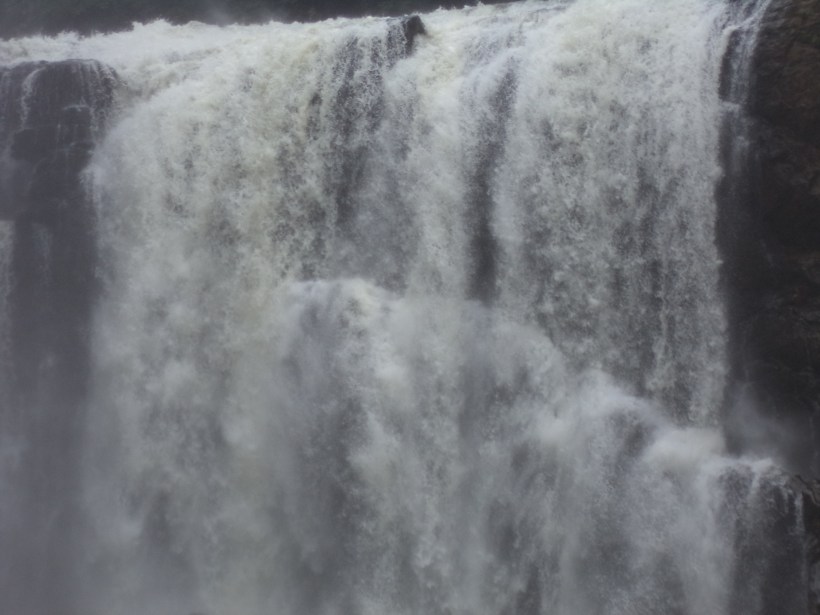
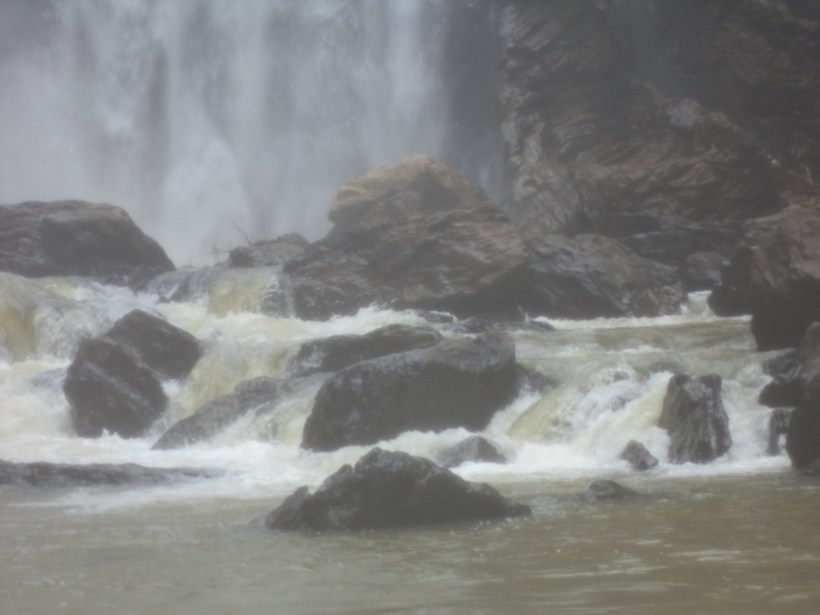
The view of milky white foam like water gushing past huge rocky outcrops rendered us speechless. Sathodi is among the few waterfalls in Karnataka whose plunge pool is accessible to the people. We crossed over steep rocks and logs to reach the plunge pool & were extremely cautious as one wrong step would have landed us in the flowing water of the stream which can either lead to injury or can prove fatal. Once we crossed these rocks we came face to face with the white water cascading down the steep slope which flowed on its way, nonchalantly, as if nothing had occurred. Its gushing sound was serene & permeated our minds.

dsc00094

The waterfall is formed by Dabbesal, which is the tributary of River Kali. One has to take a small diversion of about 2 km to see the point from where the falls originate. The view is breathtaking and does justice to the name ‘Niagara of Karnataka’.

DSC_0023.JPG

Travel Pointers

  1. Pack some snacks when going there as nothing is available, alternatively one can eat full stomach at Yellapur
  2. Avoid going during Monsoon, as roads are very slippery and water logged. Visit during October as the roads are less water logged and the waterfall is in its full flow
  3. Riding in a 4 wheeler would be safer than on a 2 wheeler
  4. It is around 70 km from Sirsi, 17 km from Yellapur, 85 km from Hubli; 215 km from Shimoga and around 450 km from Bangalore
  5. Combine Magud falls with Sathodi falls in a single trip as both are nearby

Postcard from MALDIVES!

                                                                          Subhayan Bhattacharyya

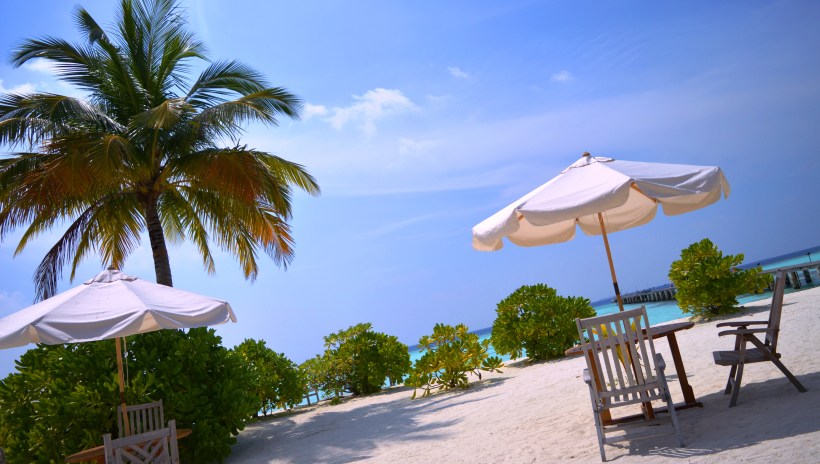
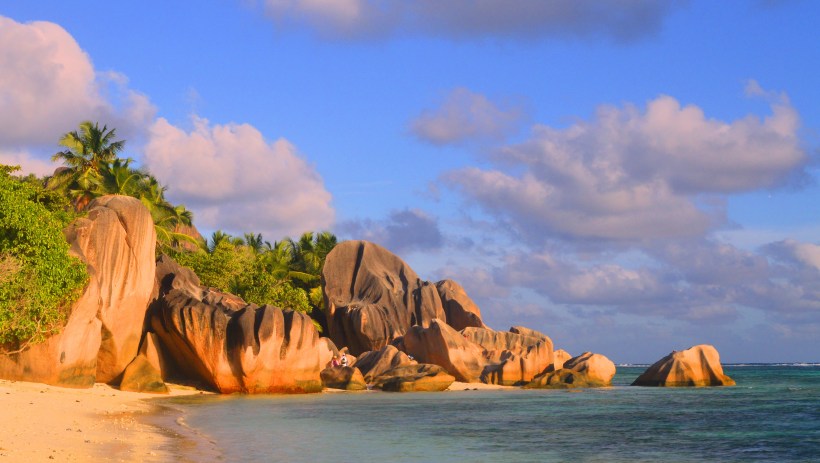
From the moment I started chalking plan to travel to Maldives, all I had in my mind was pristine white sand and turquoise blue water. Being a traveler who moves around on shoestring budget, it was always difficult to manage everything yet miss nothing.

It took me one month of planning and then finally I was on my way to this enthralling destination with my best travel mate, my better half. From the moment the flight took off both of us were thrilled, and then came the moment after one and half hours when we saw tiny islands spread amongst blue water of the Indian Ocean, like clouds in the sky.

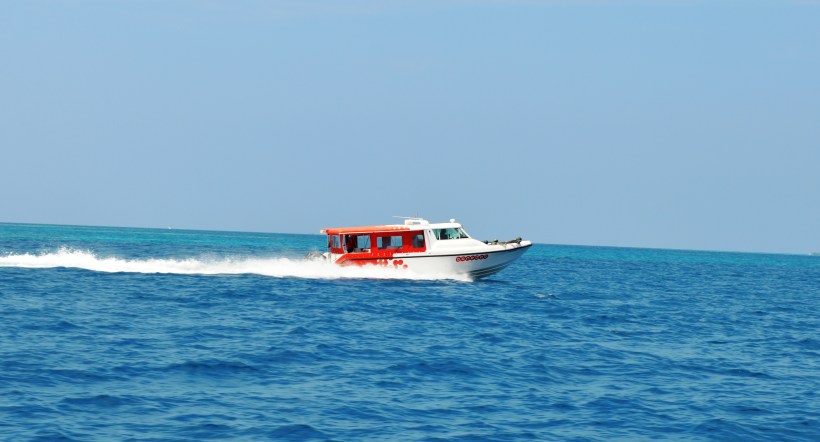
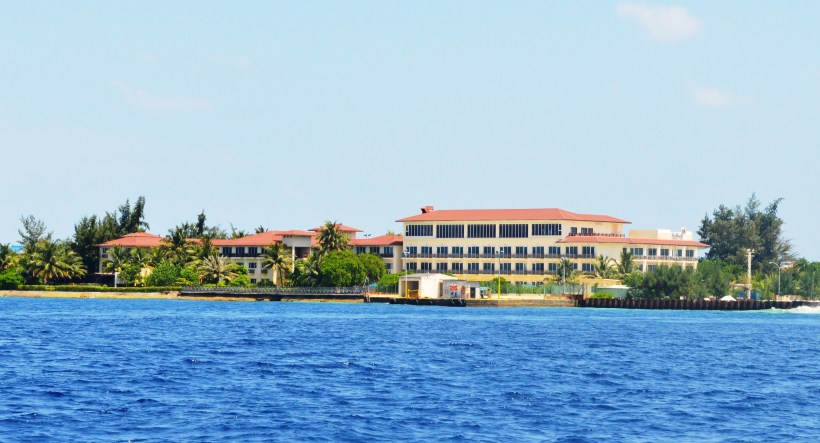
We landed at the Ibrahim Nasir International airport in Male against the backdrop of a setting Sun. The juncture we stepped outside the airport our jaws dropped as we had never imagined that we will see blue water just outside.  From there our journey took us to South Male Atoll; though we were on a speed boat it seemed everything had come to a standstill and we were not looking at each other but to the captivating view that was surrounding us. We reached our destination in less than an hour’s time having crossed many beautiful small islands on our way.  We relaxed in the evening in anticipation of the adventures that waited us.DSC_0615.JPG

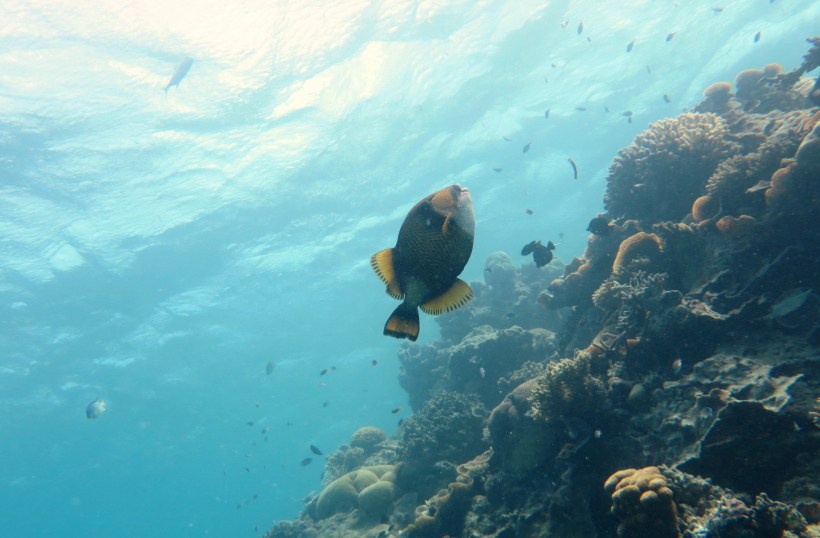
The next day the adventures started: First to come was the thrilling experience of scuba diving in the lagoons of South Atoll. The moment one enters the water one feels otherworldly. Visibility is superb in the warm waters surrounding the atolls. Healthy corals are virtually untouched by humans. Large pelagic including whale sharks are attracted into the channels to feed on the profusion of smaller reef fish schooling close to the coral walls and submerged thilas. We were lucky enough to see reef sharks, manta rays, star fishes; snappers, soldier fishes, moray eels etc., but missed out on the whale sharks & the turtles. We came out after a two hour sojourn in the underworld. In the evening we took to snorkeling and were again amongst the small fishes, reef sharks & rays.IMG_1005.JPG

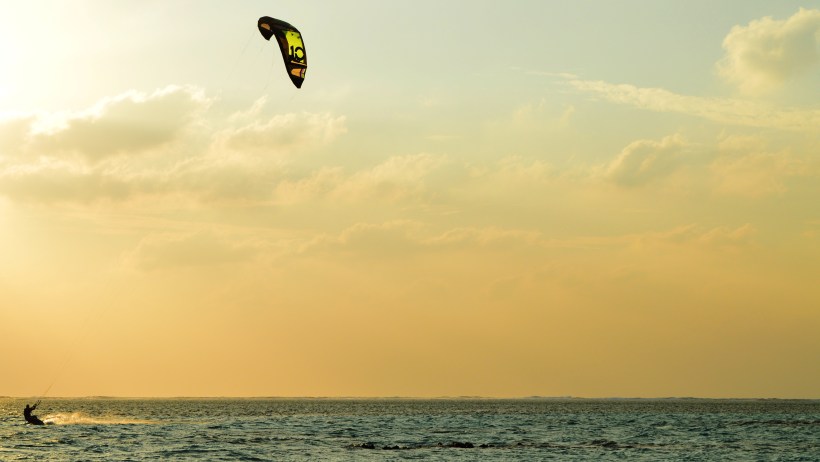
The next day began with a learning experience in kite surfing. I got lucky as one of the tourists was ready to teach me the basics. After a few hiccups I did manage to start to kite surf but the experience was very tiring and not a satisfying one. May be I need to get my physics right the next time. In the evening we went for a dolphin ride into deep sea. It was a stupendous experience. The dolphins were swaying on the ocean surface to the tunes of the whistle of our boatmen.

DSC_0563.JPG

The next day was the penultimate day of the trip. Again we took to snorkeling to relax ourselves and then we spent our time feeding manta rays and playing volleyball in the beach. In between all the things I mentioned we also had awesome food which mainly consisted of Mediterranean flavors and some amazing sea food.

DSC_0557.JPG

From the moment our flight had taken off to reach Maldives to the moment we boarded the flight to return home we never realized how time flew by.

“Some memories are unforgettable, remaining ever vivid and heart-warming!” – Joseph B Wirhtlin. We were taking back with us unforgettable memories which will last a lifetime.

DSC_0620.JPG

Travel pointers:

  1. If travelling from India, book flight tickets from Kochi and 45 days before to economize travel costs. Free Visa on arrival for all Indians!
  2. Also if you are not a food traveler then try to book full board meal plans at the place you choose to stay.
  3. If your interest lies in scuba diving then dive in South atoll to see untouched coral reefs and whale sharks or in North Atoll to see manta rays & turtles. There are resorts available which specialize in scuba diving only and hence understands your needs better. Best time for scuba diving is January to March as visibility is up to 40 m.
  4. Maldives has excellent climate round the year so you can plan your visit any time of the year for a vacation.