Subhayan Bhattacharyya
The day began with the prospect of an exciting ride from Mahe Island to Praslin. We had booked ourselves a catamaran which took about 45 minutes to reach Praslin. The ride itself was adventure filled with sea water splashing on us time and again. Also the view of the ocean dotted with Islands from top deck of the catamaran is amazing.
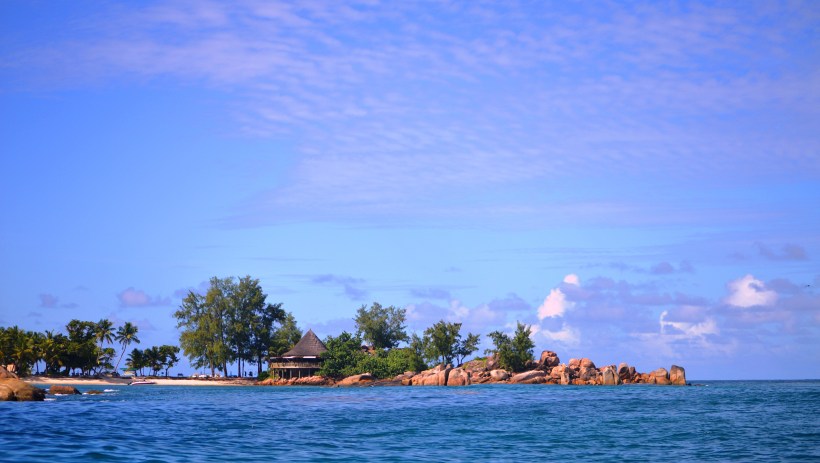
Praslin is the second largest island (38.5 km2) of the Seychelles, lying 44 km (27 mi) northeast of Mahé. Praslin has a population of around 7,533 people and the main settlements are the Baie Ste Anne, Anse Volbert and Grand’ Anse.
It was named Isle de Palmes by explorer Lazare Picault in 1744. During that time it was used as a hideaway by pirates and Arab merchants. In 1768 it was renamed Praslin in honour of French diplomat César Gabriel de Choiseul, duc de Praslin.
Upon reaching Praslin, we hopped on our pre-booked rent car and headed towards our home-stay on Grand Anse. While driving to Grand Anse, we lost our way and the locals were very eager to guide us and one of them even helped me by driving the car as the lane which I had entered was very difficult to manoeuvre. On reaching Ocean Villa, our home-stay in Praslin, we were welcomed with coconut water decorated with local flowers.
In the evening we took to the waters of Grand Anse and then enjoyed shopping in the local market. Later at night we tried local cuisine in Praslin.
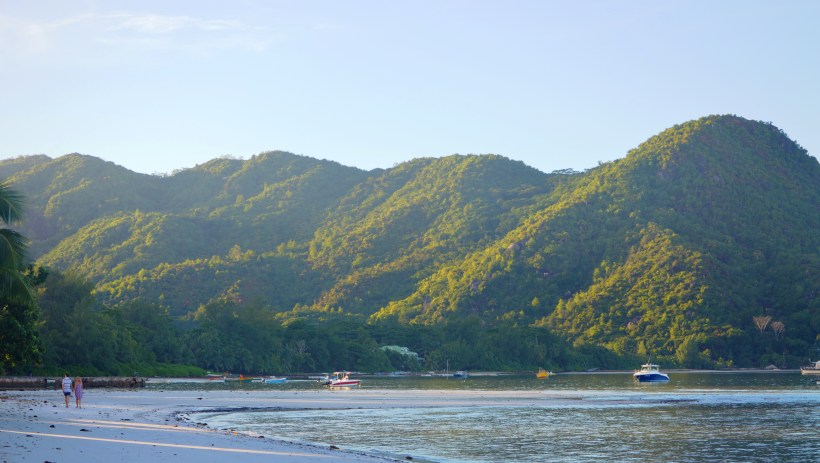
The next day after breakfast, we went on a guided tour to Curieuse Island. Curieuse Island is a small granitic island close to the north coast of the island of Praslin. Curieuse is notable for its bare red earth intermingled with the unique coco de mer palms, one of the cultural icons of the Seychelles, only growing on the two neighbouring islands. We went there by speed boat. Few other people of different nationalities also joined us. On reaching the Island we learnt about the history of the place.
The Island was originally named “Ile Rouge” due to its red coloured soil. In 1768 the French claimed possession of the island, naming it after the schooner “La Curieuse”, a ship that was under the command of explorer Marc-Joseph Marion du Fresne. Like a number of islands in the Seychelles, there was a native giant tortoise population that was quickly extirpated.
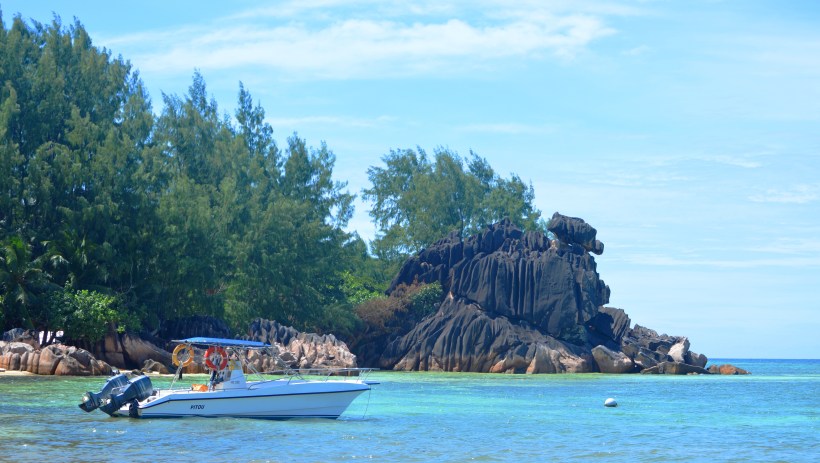
In 1771 sailors set fire to the island, intending to make harvesting of the coco de mer nuts easier. The fire destroyed many of the islands’ native trees, and indications of the fire can still be seen today, nearly 250 years later.
In 1829, Curieuse was first used as a leper colony, and it functioned in this capacity until 1965. This helped protect the ecosystem from human influence. Today, ruins of the leprosarium remain, as well as the former physician’s residence at Anse St. Joseph (now an educational centre and museum).
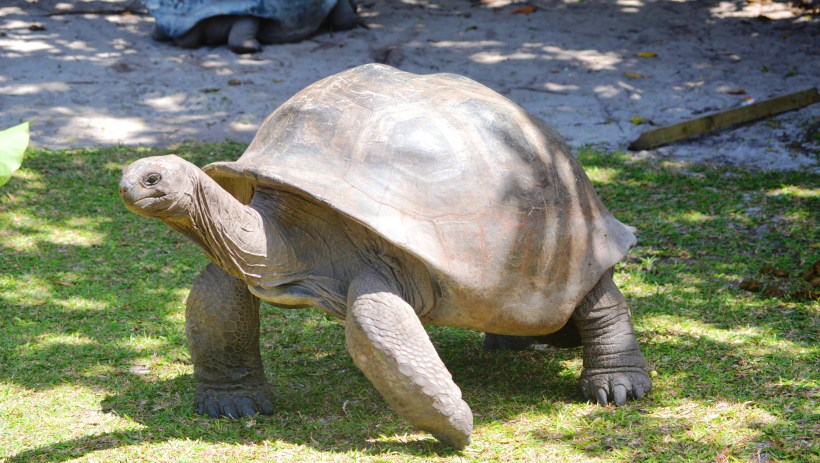
After visiting the museum, we took the trail to Ranger’s station which passes through the mangrove swamp. Upon reaching the Ranger’s station we were surprised to see creep of tortoises. They enjoyed the company of the visitors. Tortoises fed on the leaves and fruits such as banana and apples. We had lunch consisting of avocado and papaya salads, rice with Creole sauce, Job fish cooked on barbeque etc. Post lunch we went to St Pierre Islet to do snorkelling. It is at a short distance from Curieuse Island.
The coral of St Pierre was badly damaged in the tsunami in December 2004 and the reef has not yet regained its former glory, but the sea bed is still very rich in fish. The most interesting area to explore (and also the shallowest) lies to the west of the islet (that is, on the Praslin side).
Here and there, the coral is growing back, but has only reached medium size. Fortunately, despite the damaged seabed, St Pierre still deserves its reputation as a natural aquarium. Clown surgeonfish and powder blue tang pass from rock to rock, groups of sergeant major fish play in the eddies, and shoals of fusiliers and jacks dart through the granite rocks.
On the way back to Praslin we were sharing our experiences with fellow travellers and learnt about the things we can still explore in Praslin.
Travel Pointers:
- In Praslin try to stay on the East coast as there are many diving and snorkelling opportunities.
- To have a good diving experience, try with Whitetip Divers (located in the Paradise Sun hotel) or Octopus Divers (located in Anse Volbert).
- If you want to try some Creole food try Smoked Fish/ Octopus Salad as it is popular in this part of Seychelles.
- Plan to visit one of the nearby Islands; Curieuse, Sister or St Pierre. There are water taxi or speed boats available on any of the beaches or one can inquire at the hotel also. Negotiate the best price including lunch & snorkelling as part of a package.
 Outwards-n-Onwards